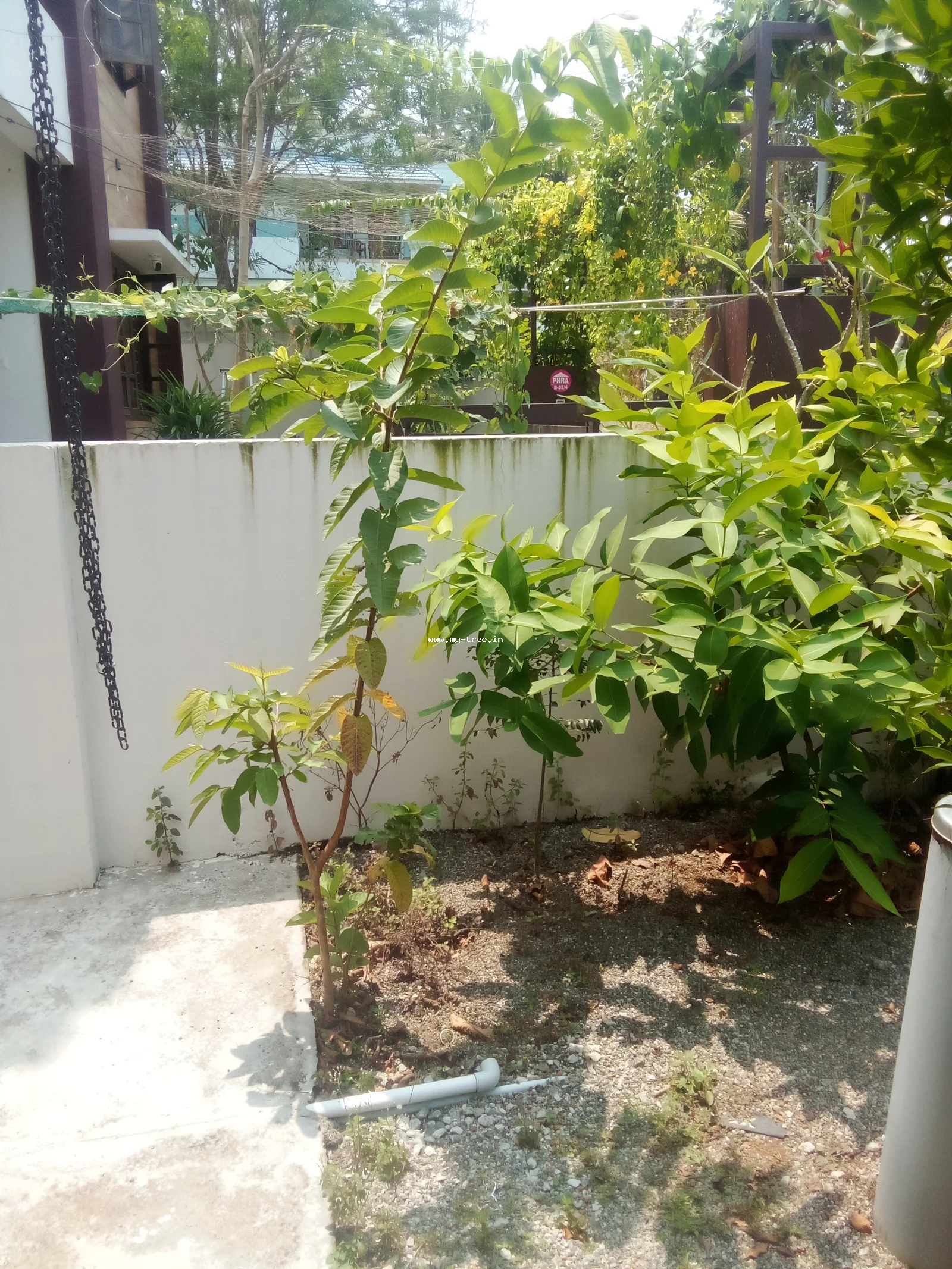
Custard apple leaves are used in traditional medicine for treating diarrhea, dysentery, and as an insecticide. The fruit is rich in vitamin C, antioxidants, and minerals, aiding digestion and boosting immunity. Bark decoctions treat hypertension; seeds have pesticidal and abortifacient properties. Unripe fruit helps with ulcers.
🔊 Listen
Produces delicious, nutritious fruit eaten fresh or in desserts. Drought-tolerant once established, suitable for home gardens. Attracts pollinators; hand-pollination boosts yield. Leaves deter insects naturally.
🔊 Listen
Annona squamosa
🔊 Listen
⚠️ My-Tree is not responsible for misuse. Always consult a qualified professional before using any plant material.
🌱 Story of Custard Apple
Annona squamosa, commonly known as custard apple or sugar apple, is a small deciduous tree native to tropical Americas but widely cultivated in India and other warm regions. It grows 3-8 meters tall with a spreading canopy and produces heart-shaped, scaly green fruits filled with sweet, creamy white flesh. The tree thrives in well-drained soil, full sun, and tropical climates, producing fragrant flowers pollinated by beetles.
This tree heals the planet
Every single day, Custard Apple gives back
☁️ CO₂ Absorbed
25 kg/yr
≈ 125 km of car emissions offset annually
💨 Oxygen Released
18 kg/yr
💧 Water Conserved
4,250 L/yr
10
Age
800.0m
Height
35yr
Lifespan
Stage
📋 Details
🌿
Family
Annonaceae
📍
Native Status
—
🏙️
City
Ponganpara, Trivandrum
🗺️
Location
Private Property
🩺 Medicinal Properties
Custard apple leaves are used in traditional medicine for treating diarrhea, dysentery, and as an insecticide. The fruit is rich in vitamin C, antioxidants, and minerals, aiding digestion and boosting immunity. Bark decoctions treat hypertension; seeds have pesticidal and abortifacient properties. Unripe fruit helps with ulcers.
✨ What makes Custard Apple special
Produces delicious, nutritious fruit eaten fresh or in desserts. Drought-tolerant once established, suitable for home gardens. Attracts pollinators; hand-pollination boosts yield. Leaves deter insects naturally.