Apple fruit contains fiber, antioxidants, and vitamins that support digestion and heart health. Traditionally, apple cider vinegar and extracts have been used to aid digestion and control blood sugar. Some studies suggest apple polyphenols may help reduce inflammation and support metabolic health.
🔊 Listen
Apple trees are key orchard species that deliver high‑yield edible fruit, support agro‑ecosystems, and stabilize local microclimates. They are widely cultivated across temperate regions and are important for rural economies, food security, and cultural food traditions.
🔊 Listen
Apple trees are key orchard species that deliver high‑yield edible fruit, support agro‑ecosystems, and stabilize local microclimates. They are widely cultivated across temperate regions and are important for rural economies, food security, and cultural food traditions.
🔊 Listen
Apple fruit contains fiber, antioxidants, and vitamins that support digestion and heart health. Traditionally, apple cider vinegar and extracts have been used to aid digestion and control blood sugar. Some studies suggest apple polyphenols may help reduce inflammation and support metabolic health.
🔊 Listen
100 years
🔊 Listen
1500 meters
🔊 Listen
Native
🔊 Listen
⚠️ My-Tree is not responsible for misuse. Always consult a qualified professional before using any plant material.
🌱 Story of Apple Tree
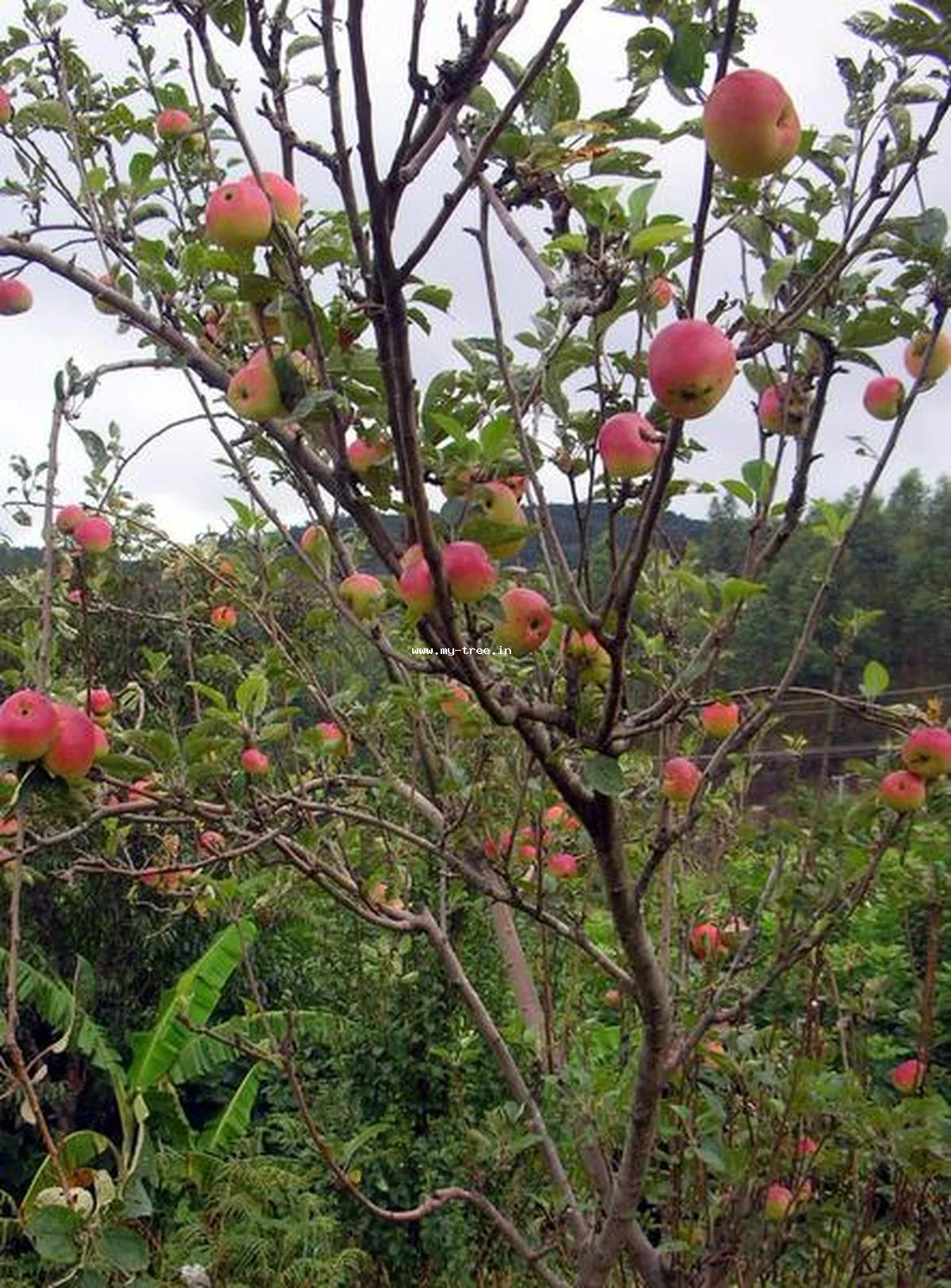
The apple tree is a deciduous fruit tree grown worldwide for its edible fruit. It typically reaches about 15 meters in height under standard growth and can live up to 100 years. Apple trees bloom in spring with white‑pink flowers that turn into fruit, providing shade, habitat, and food for wildlife and people.
This tree heals the planet
Every single day, Apple Tree gives back
☁️ CO₂ Absorbed
22 kg/yr
≈ 110 km of car emissions offset annually
💨 Oxygen Released
16 kg/yr
💧 Water Conserved
3,740 L/yr
25
Age
—m
Height
—yr
Lifespan
Young
Stage
📋 Details
🌿
Family
Rosaceae
📍
Native Status
—
🏙️
City
Kollam
🗺️
Location
Private Property
🩺 Medicinal Properties
Apple fruit contains fiber, antioxidants, and vitamins that support digestion and heart health. Traditionally, apple cider vinegar and extracts have been used to aid digestion and control blood sugar. Some studies suggest apple polyphenols may help reduce inflammation and support metabolic health.
✨ What makes Apple Tree special
Apple trees are key orchard species that deliver high‑yield edible fruit, support agro‑ecosystems, and stabilize local microclimates. They are widely cultivated across temperate regions and are important for rural economies, food security, and cultural food traditions.