Mulberry leaves are used in traditional medicine to manage blood sugar levels and improve cholesterol. The fruit is rich in antioxidants, vitamins, and minerals, often used to treat anemia and improve digestive health.
🔊 Listen
The primary speciality of this tree is its critical role in the silk industry, as its leaves are the sole food source for the silkworm (Bombyx mori).
🔊 Listen
The primary speciality of this tree is its critical role in the silk industry, as its leaves are the sole food source for the silkworm (Bombyx mori).
🔊 Listen
Mulberry leaves are used in traditional medicine to manage blood sugar levels and improve cholesterol. The fruit is rich in antioxidants, vitamins, and minerals, often used to treat anemia and improve digestive health.
🔊 Listen
100 years
🔊 Listen
1 meters
🔊 Listen
Native
🔊 Listen
⚠️ My-Tree is not responsible for misuse. Always consult a qualified professional before using any plant material.
🌱 Story of Mulberry
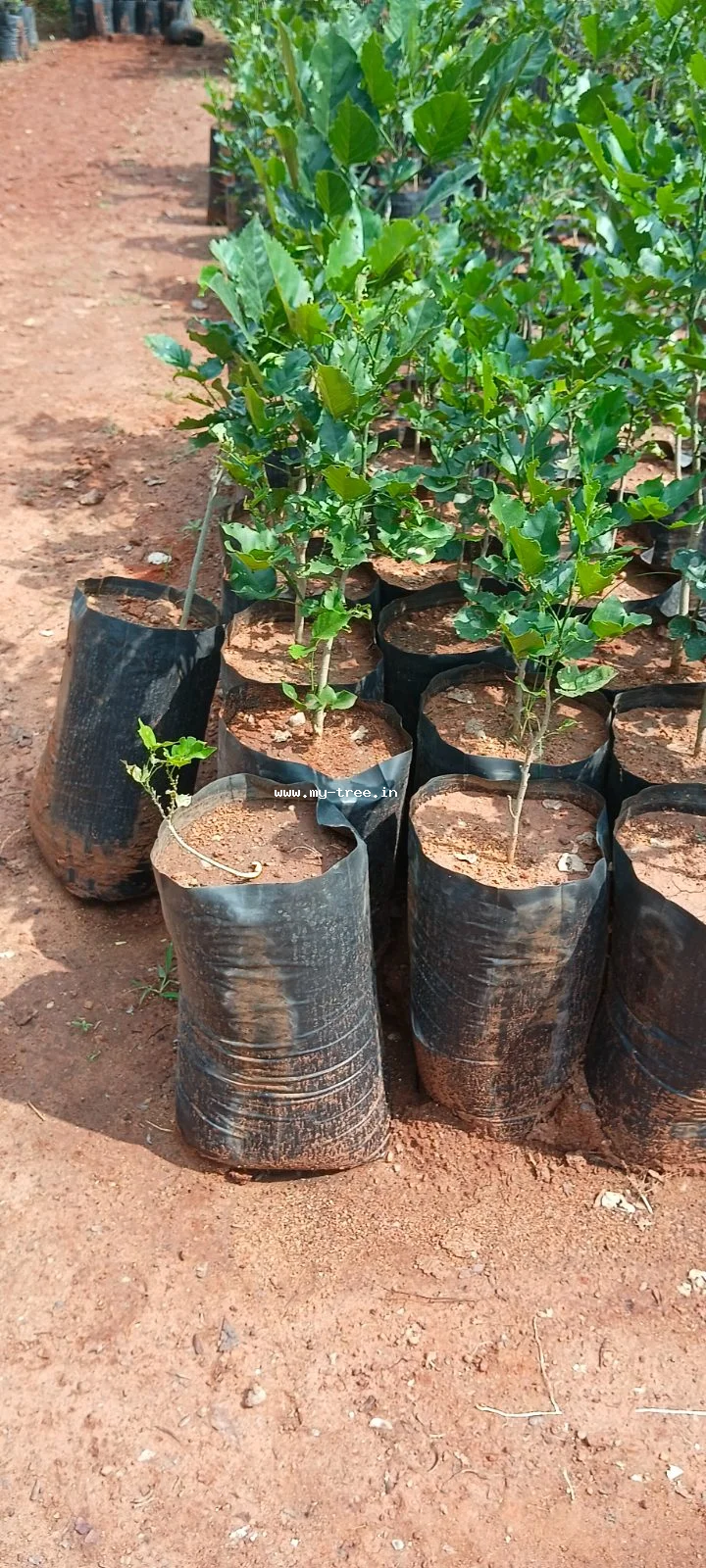
These are young mulberry saplings being raised in a nursery environment. Mulberry trees are widely cultivated in India, particularly for sericulture (silkworm farming). They are fast-growing deciduous trees known for their edible fruit and high-quality leaves used as fodder.
This tree heals the planet
Every single day, Mulberry gives back
☁️ CO₂ Absorbed
20 kg/yr
≈ 100 km of car emissions offset annually
💨 Oxygen Released
15 kg/yr
💧 Water Conserved
3,400 L/yr
—
Age
1.0m
Height
100yr
Lifespan
Sapling
Stage
📋 Details
🌿
Family
Moraceae
📍
Native Status
Native
🏙️
City
Palayamkottai
🗺️
Location
Campus
🩺 Medicinal Properties
Mulberry leaves are used in traditional medicine to manage blood sugar levels and improve cholesterol. The fruit is rich in antioxidants, vitamins, and minerals, often used to treat anemia and improve digestive health.
✨ What makes Mulberry special
The primary speciality of this tree is its critical role in the silk industry, as its leaves are the sole food source for the silkworm (Bombyx mori).