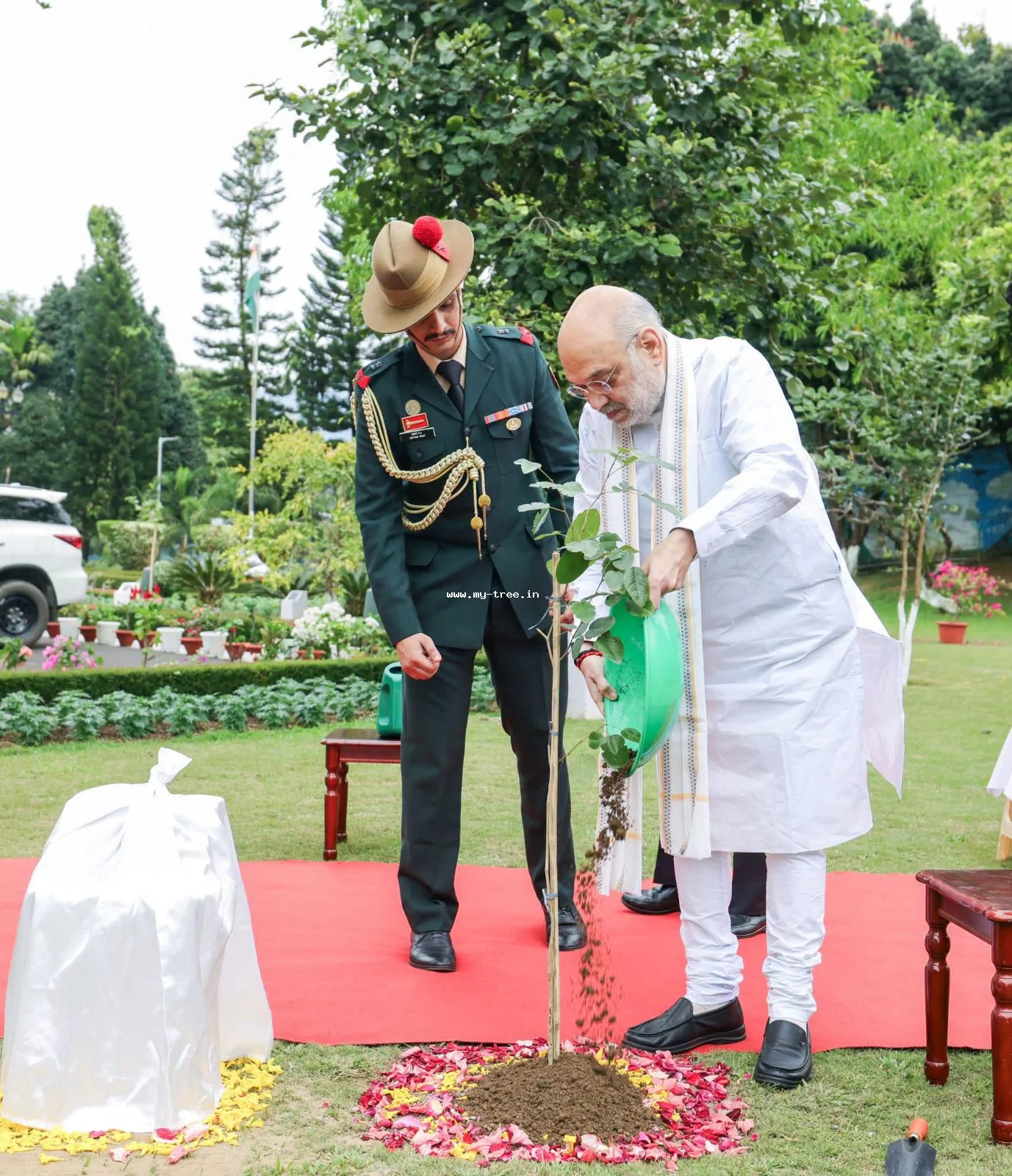
November 23, 2026 · Lok Bhawan campus Arunachal Pradesh
Digital IdentityTree Visiting Card
🌿
TREE No. 1283
My-Tree · Green-Campus
Rudraksha Tree
Elaeocarpus ganitrus
“Rudraksha”
FamilyElaeocarpaceae
StatusNative
LocationLok Bhawan campus Arunachal Pradesh
TaggedNovember 23, 2026
Scan to meet this treemy-tree.in/tree/1283
🌿 Hi, I'm Rudraksha Tree
Ask me anything — in any language
🌳 Rudraksha Tree is speaking...
Quick Questions
Different parts of the Rudraksha tree, including seeds, bark, and leaves, are traditionally used in Ayurveda for stress, anxiety, headache, fever, skin problems, and wounds. Research reviews report potential antioxidant, antimicrobial, anti-inflammatory, antihypertensive, antidiabetic, anxiolytic, and anti-epileptic activities. These uses are traditional and should not replace professional medical advice. [1][3][8]
🔊 Listen
Rudraksha is especially revered for its hard, naturally ridged seeds, which are used as sacred prayer beads in Hindu and Buddhist traditions. The tree is also valued as a long-lived evergreen shade tree and for its cultural, spiritual, and medicinal significance. [1][3]
🔊 Listen
Rudraksha is especially revered for its hard, naturally ridged seeds, which are used as sacred prayer beads in Hindu and Buddhist traditions. The tree is also valued as a long-lived evergreen shade tree and for its cultural, spiritual, and medicinal significance. [1][3]
🔊 Listen
Different parts of the Rudraksha tree, including seeds, bark, and leaves, are traditionally used in Ayurveda for stress, anxiety, headache, fever, skin problems, and wounds. Research reviews report potential antioxidant, antimicrobial, anti-inflammatory, antihypertensive, antidiabetic, anxiolytic, and anti-epileptic activities. These uses are traditional and should not replace professional medical advice. [1][3][8]
🔊 Listen
100 years
🔊 Listen
20 meters
🔊 Listen
Native
🔊 Listen
⚠️ My-Tree is not responsible for misuse. Always consult a qualified professional before using any plant material.
🌱 Story of Rudraksha Tree
Rudraksha (Elaeocarpus ganitrus) is a large evergreen tree with a broad crown, greyish rough bark, glossy oblong leaves, and small white flowers. It commonly grows about 15–30 m tall and produces distinctive blue-purple fruits with hard, ridged seeds traditionally used as prayer beads. The tree is valued for its ecological role, cultural importance, and traditional medicinal uses. [3][4]
This tree heals the planet
Every single day, Rudraksha Tree gives back
☁️ CO₂ Absorbed
22 kg/yr
≈ 110 km of car emissions offset annually
💨 Oxygen Released
16 kg/yr
💧 Water Conserved
3,740 L/yr
15
Age
20.0m
Height
100yr
Lifespan
Sapling
Stage
📋 Details
🌿
Family
Elaeocarpaceae
📍
Native Status
Native
🏙️
City
Lok Bhawan campus Arunachal Pradesh
🗺️
Location
Campus
🩺 Medicinal Properties
Different parts of the Rudraksha tree, including seeds, bark, and leaves, are traditionally used in Ayurveda for stress, anxiety, headache, fever, skin problems, and wounds. Research reviews report potential antioxidant, antimicrobial, anti-inflammatory, antihypertensive, antidiabetic, anxiolytic, and anti-epileptic activities. These uses are traditional and should not replace professional medical advice. [1][3][8]
✨ What makes Rudraksha Tree special
Rudraksha is especially revered for its hard, naturally ridged seeds, which are used as sacred prayer beads in Hindu and Buddhist traditions. The tree is also valued as a long-lived evergreen shade tree and for its cultural, spiritual, and medicinal significance. [1][3]