Guava leaves are widely used in traditional medicine for their anti-diarrheal, anti-inflammatory, and antioxidant properties. They are often brewed as a tea to treat digestive issues and oral health problems.
🔊 Listen
Highly valued for its nutrient-rich, vitamin C-packed fruits and its adaptability to various soil types in tropical and subtropical climates.
🔊 Listen
Highly valued for its nutrient-rich, vitamin C-packed fruits and its adaptability to various soil types in tropical and subtropical climates.
🔊 Listen
Guava leaves are widely used in traditional medicine for their anti-diarrheal, anti-inflammatory, and antioxidant properties. They are often brewed as a tea to treat digestive issues and oral health problems.
🔊 Listen
40 years
🔊 Listen
1 meters
🔊 Listen
Non-Native
🔊 Listen
⚠️ My-Tree is not responsible for misuse. Always consult a qualified professional before using any plant material.
🌱 Story of Guava
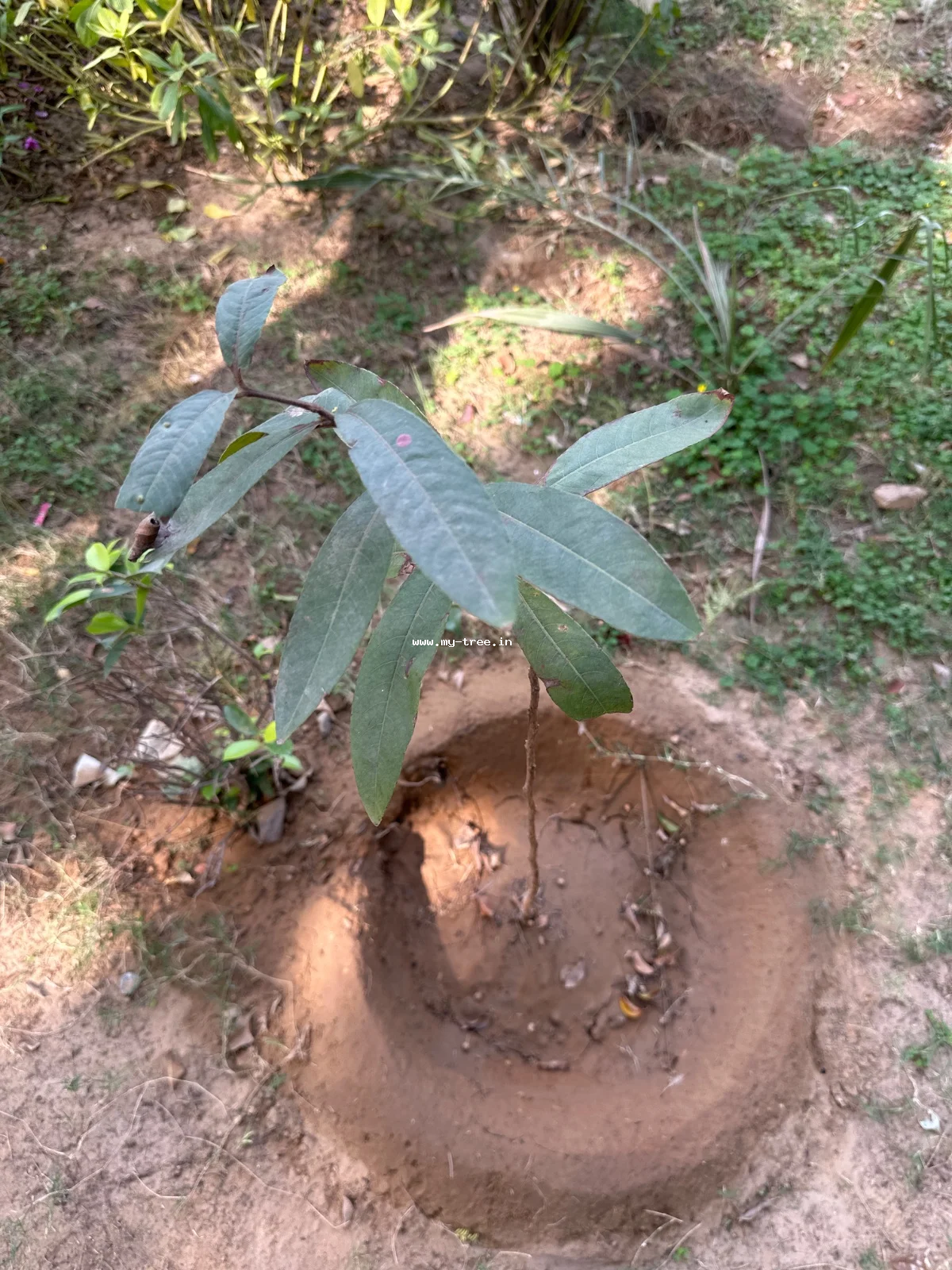
This is a young Guava sapling, identifiable by its characteristic opposite, elliptic-oblong leaves with prominent veins. It is a popular fruit-bearing tree in India, though originally native to tropical America. The plant is currently in its early growth stage, requiring consistent care and watering to establish its root system.
This tree heals the planet
Every single day, Guava gives back
☁️ CO₂ Absorbed
20 kg/yr
≈ 100 km of car emissions offset annually
💨 Oxygen Released
15 kg/yr
💧 Water Conserved
3,400 L/yr
—
Age
1.0m
Height
40yr
Lifespan
Sapling
Stage
📋 Details
🌿
Family
Myrtaceae
📍
Native Status
Non-Native
🏙️
City
Gurugram
🗺️
Location
Campus
🩺 Medicinal Properties
Guava leaves are widely used in traditional medicine for their anti-diarrheal, anti-inflammatory, and antioxidant properties. They are often brewed as a tea to treat digestive issues and oral health problems.
✨ What makes Guava special
Highly valued for its nutrient-rich, vitamin C-packed fruits and its adaptability to various soil types in tropical and subtropical climates.