The fruit, leaves, and bark are extensively used in Ayurveda. It is highly effective in treating gastrointestinal disorders like diarrhea, dysentery, and constipation. It also possesses anti-inflammatory, antimicrobial, and antioxidant properties.
🔊 Listen
The Bael tree holds significant religious importance in Hinduism, often associated with Lord Shiva. Its leaves are traditionally offered during worship. It is also known for its extreme hardiness and ability to grow in diverse soil conditions.
🔊 Listen
The Bael tree holds significant religious importance in Hinduism, often associated with Lord Shiva. Its leaves are traditionally offered during worship. It is also known for its extreme hardiness and ability to grow in diverse soil conditions.
🔊 Listen
The fruit, leaves, and bark are extensively used in Ayurveda. It is highly effective in treating gastrointestinal disorders like diarrhea, dysentery, and constipation. It also possesses anti-inflammatory, antimicrobial, and antioxidant properties.
🔊 Listen
100 years
🔊 Listen
1 meters
🔊 Listen
Native
🔊 Listen
⚠️ My-Tree is not responsible for misuse. Always consult a qualified professional before using any plant material.
🌱 Story of Bael
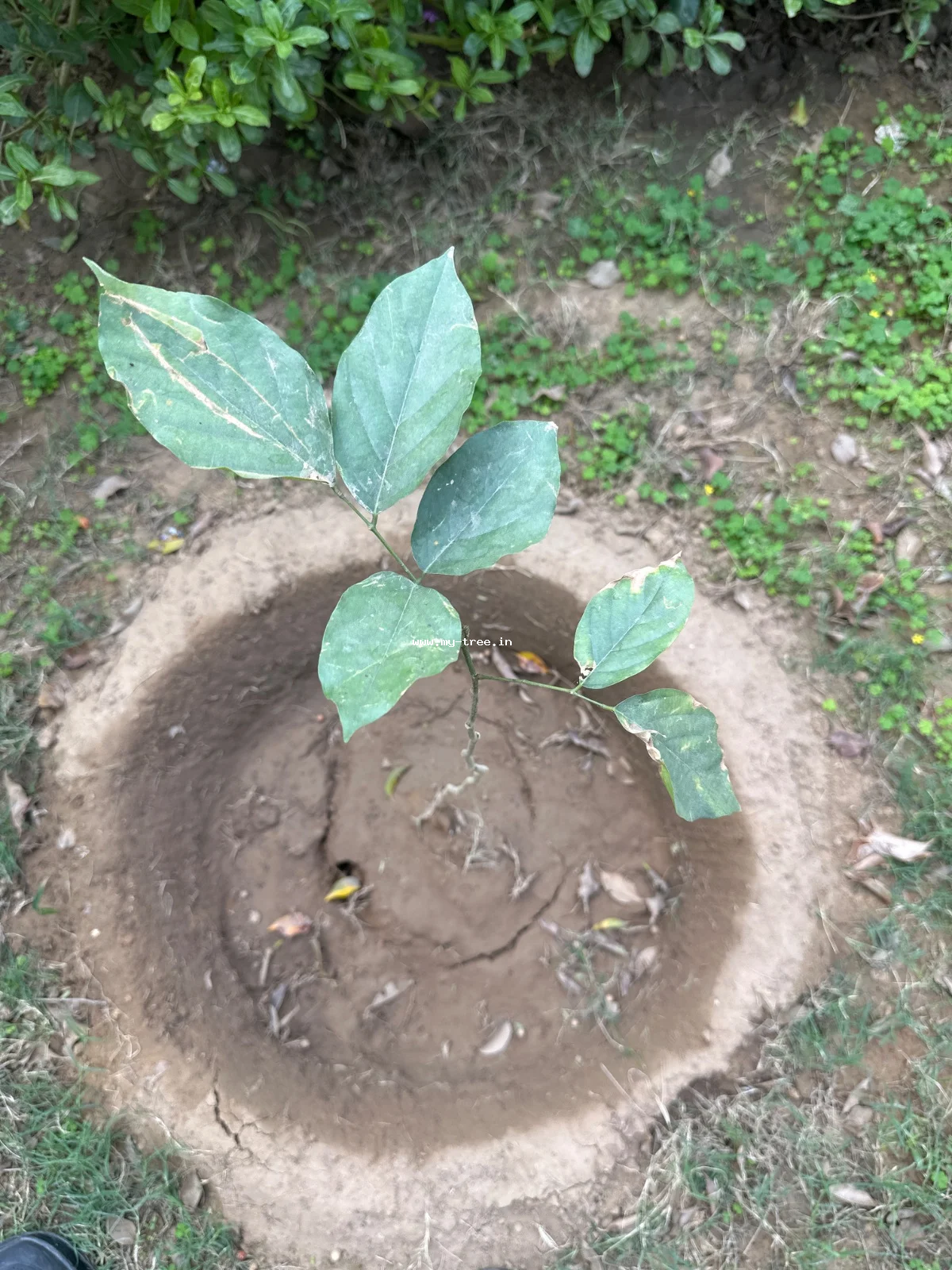
The Aegle marmelos, commonly known as Bael, is a sacred tree native to India. This specimen is in the sapling stage. Identification is based on the characteristic trifoliate leaves, which are alternate and aromatic when crushed. It is a slow-growing, deciduous tree known for its hard-shelled, woody fruit.
This tree heals the planet
Every single day, Bael gives back
☁️ CO₂ Absorbed
22 kg/yr
≈ 110 km of car emissions offset annually
💨 Oxygen Released
16 kg/yr
💧 Water Conserved
3,740 L/yr
—
Age
1.0m
Height
100yr
Lifespan
Sapling
Stage
📋 Details
🌿
Family
Rutaceae
📍
Native Status
Native
🏙️
City
Gurugram
🗺️
Location
Campus
🩺 Medicinal Properties
The fruit, leaves, and bark are extensively used in Ayurveda. It is highly effective in treating gastrointestinal disorders like diarrhea, dysentery, and constipation. It also possesses anti-inflammatory, antimicrobial, and antioxidant properties.
✨ What makes Bael special
The Bael tree holds significant religious importance in Hinduism, often associated with Lord Shiva. Its leaves are traditionally offered during worship. It is also known for its extreme hardiness and ability to grow in diverse soil conditions.