Mulberry trees have extensive medicinal uses across traditional medicine systems. Leaves contain antioxidants, flavonoids, and compounds that help regulate blood sugar levels, making them beneficial for diabetes management. Leaf extracts lower cholesterol and support cardiovascular health. The fruit is rich in vitamin C, iron, potassium, and resveratrol, providing anti-inflammatory and immune-boosting properties. Root bark treats respiratory conditions, coughs, and asthma. Mulberry compounds show anti-cancer properties and support liver health. The fruit aids digestion, prevents anemia, and promotes eye health due to anthocyanins. Traditional medicine uses mulberry for hypertension, kidney function, and skin conditions.
🔊 Listen
Morus genus trees are uniquely valued for their rapid growth rate, high biomass production, and dual purpose as food and medicinal plants. They are exceptional air purifiers, with one mature tree generating approximately 3000 kg of oxygen annually while absorbing 22 kg of CO2 per year. Mulberries ar
🔊 Listen
Morus genus trees are uniquely valued for their rapid growth rate, high biomass production, and dual purpose as food and medicinal plants. They are exceptional air purifiers, with one mature tree generating approximately 3000 kg of oxygen annually while absorbing 22 kg of CO2 per year. Mulberries are silvicultural pioneers, quickly establishing in degraded lands. The trees support sericulture (silkworm farming) as Morus alba is the primary silkworm food plant. Their deep root systems excel at soil stabilization and water conservation. Unlike many fruit trees, mulberries produce abundant fruit with minimal maintenance and are drought-tolerant once established.
🔊 Listen
Mulberry trees have extensive medicinal uses across traditional medicine systems. Leaves contain antioxidants, flavonoids, and compounds that help regulate blood sugar levels, making them beneficial for diabetes management. Leaf extracts lower cholesterol and support cardiovascular health. The fruit is rich in vitamin C, iron, potassium, and resveratrol, providing anti-inflammatory and immune-boosting properties. Root bark treats respiratory conditions, coughs, and asthma. Mulberry compounds show anti-cancer properties and support liver health. The fruit aids digestion, prevents anemia, and promotes eye health due to anthocyanins. Traditional medicine uses mulberry for hypertension, kidney function, and skin conditions.
🔊 Listen
100 years
🔊 Listen
15 meters
🔊 Listen
Moraceae
🔊 Listen
⚠️ My-Tree is not responsible for misuse. Always consult a qualified professional before using any plant material.
🌱 Story of Mulberry
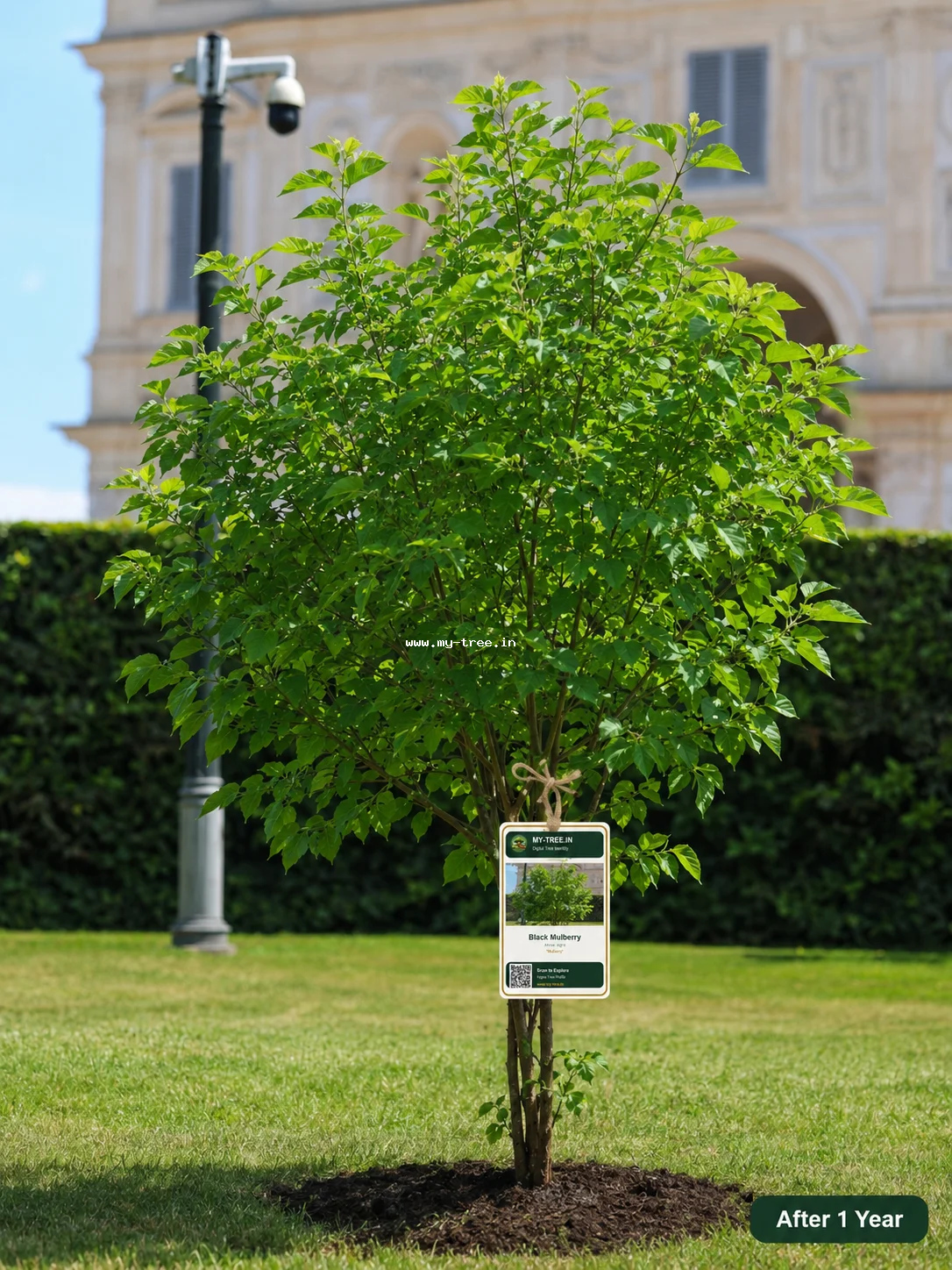
Morus is a genus of 19 species of deciduous trees commonly known as mulberries. These fast-growing trees produce edible fruits and are valued for their air-purifying abilities. Mulberry trees have broad leaves, serrated edges, and develop dense canopies. They thrive in temperate and subtropical climates, tolerating various soil types. The genus includes White Mulberry (Morus alba), Red Mulberry (Morus rubra), and Black Mulberry (Morus nigra). Trees typically reach 10-15 meters tall with lifespans of 50-100 years. Their roots help reduce soil erosion and conserve water.
This tree heals the planet
Every single day, Mulberry gives back
☁️ CO₂ Absorbed
22 kg/yr
≈ 110 km of car emissions offset annually
💨 Oxygen Released
16 kg/yr
💧 Water Conserved
3,740 L/yr
25
Age
15.0m
Height
100yr
Lifespan
Sapling
Stage
📋 Details
🌿
Family
Moraceae
📍
Native Status
—
🏙️
City
Kollam
🗺️
Location
Private Property
🩺 Medicinal Properties
Mulberry trees have extensive medicinal uses across traditional medicine systems. Leaves contain antioxidants, flavonoids, and compounds that help regulate blood sugar levels, making them beneficial for diabetes management. Leaf extracts lower cholesterol and support cardiovascular health. The fruit is rich in vitamin C, iron, potassium, and resveratrol, providing anti-inflammatory and immune-boosting properties. Root bark treats respiratory conditions, coughs, and asthma. Mulberry compounds show anti-cancer properties and support liver health. The fruit aids digestion, prevents anemia, and promotes eye health due to anthocyanins. Traditional medicine uses mulberry for hypertension, kidney function, and skin conditions.
✨ What makes Mulberry special
Morus genus trees are uniquely valued for their rapid growth rate, high biomass production, and dual purpose as food and medicinal plants. They are exceptional air purifiers, with one mature tree generating approximately 3000 kg of oxygen annually while absorbing 22 kg of CO2 per year. Mulberries ar