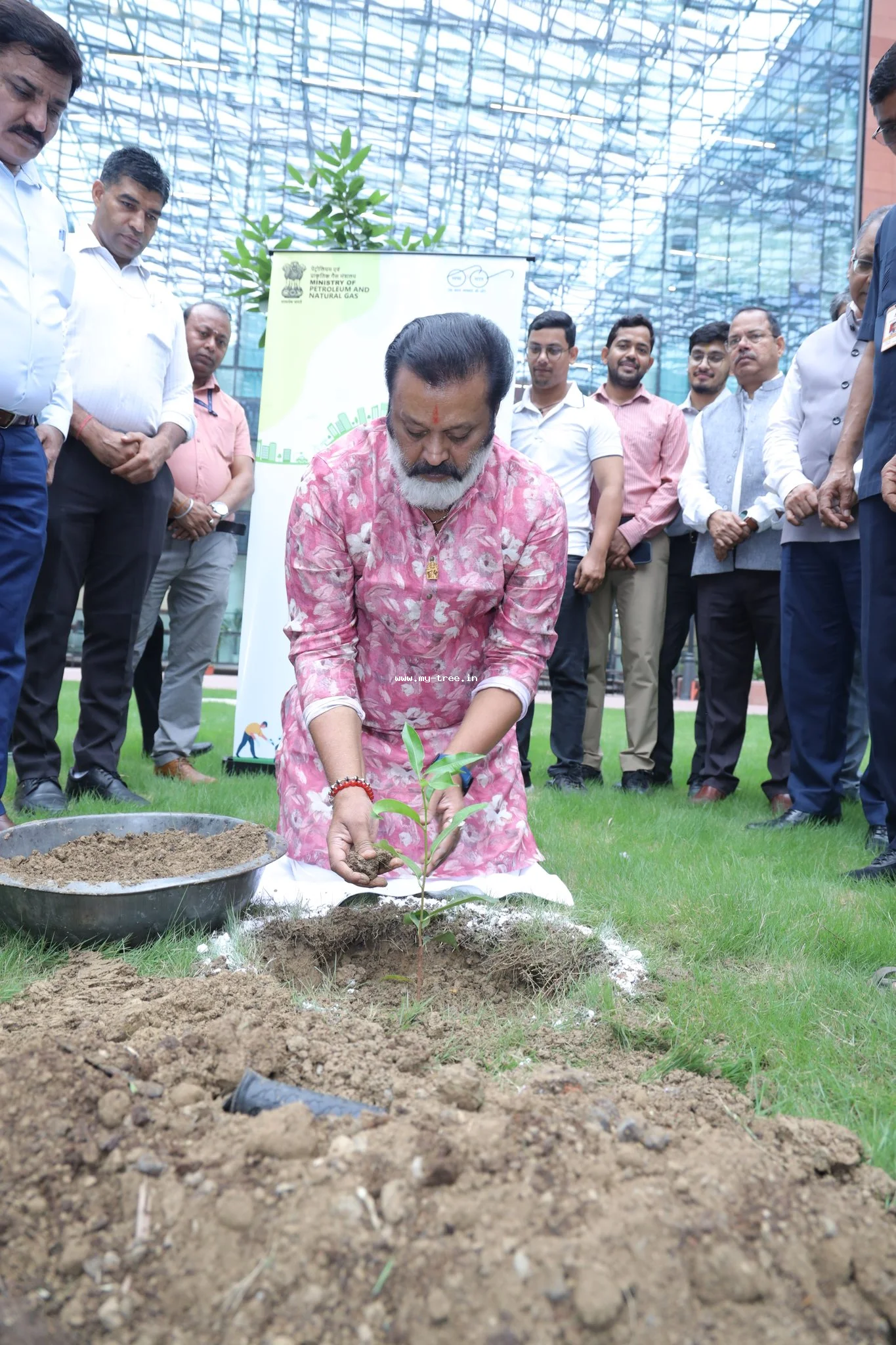
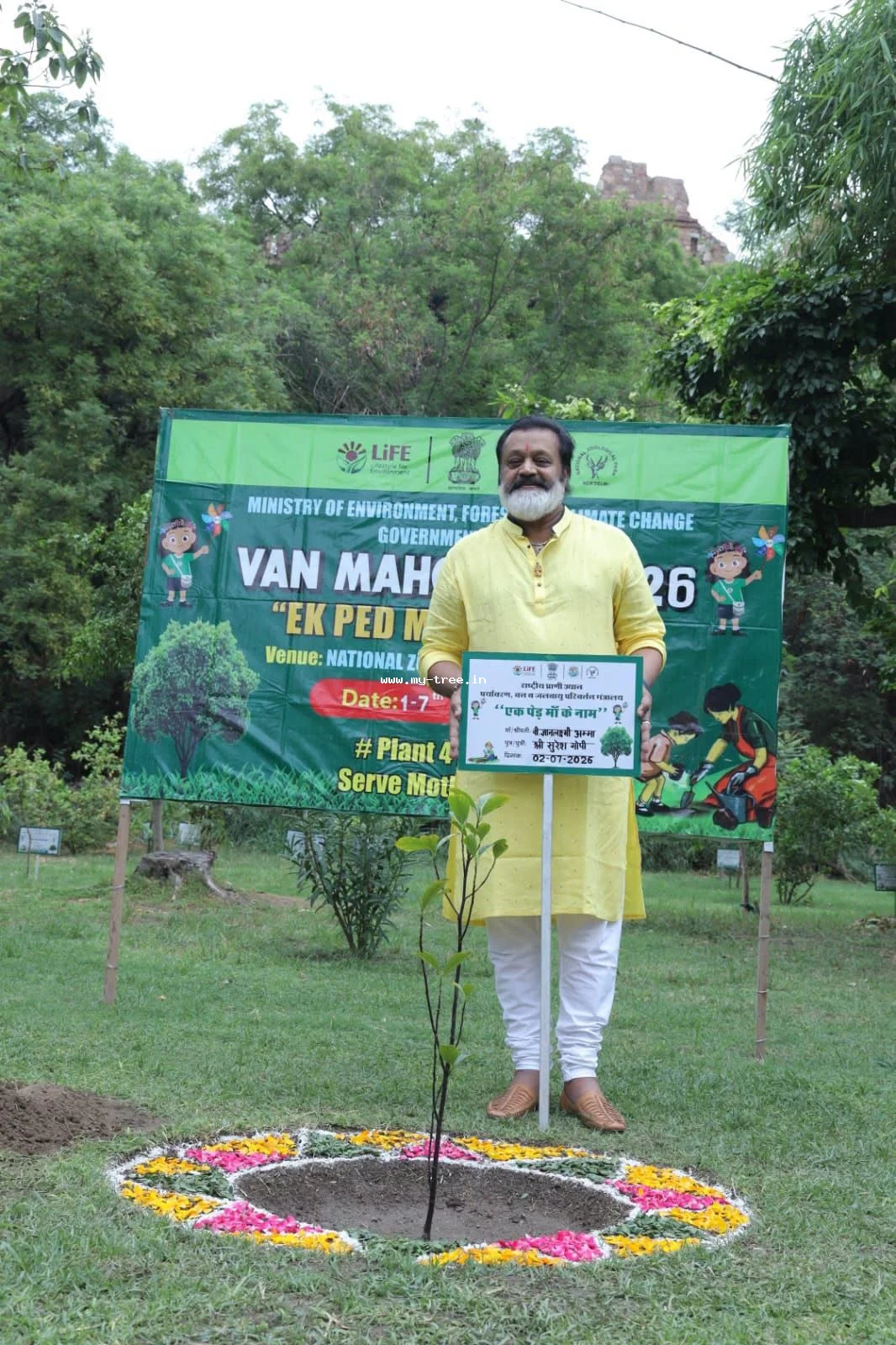
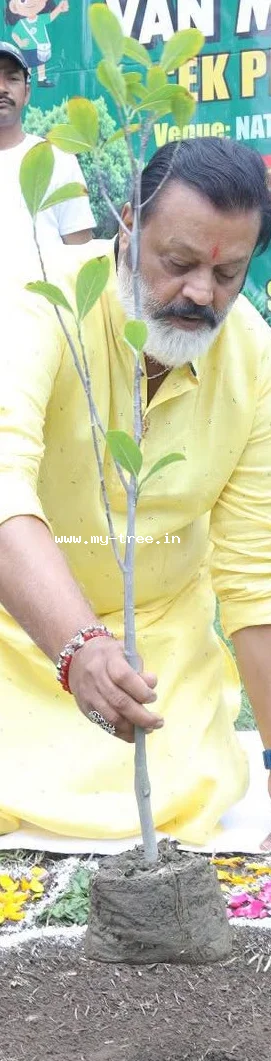
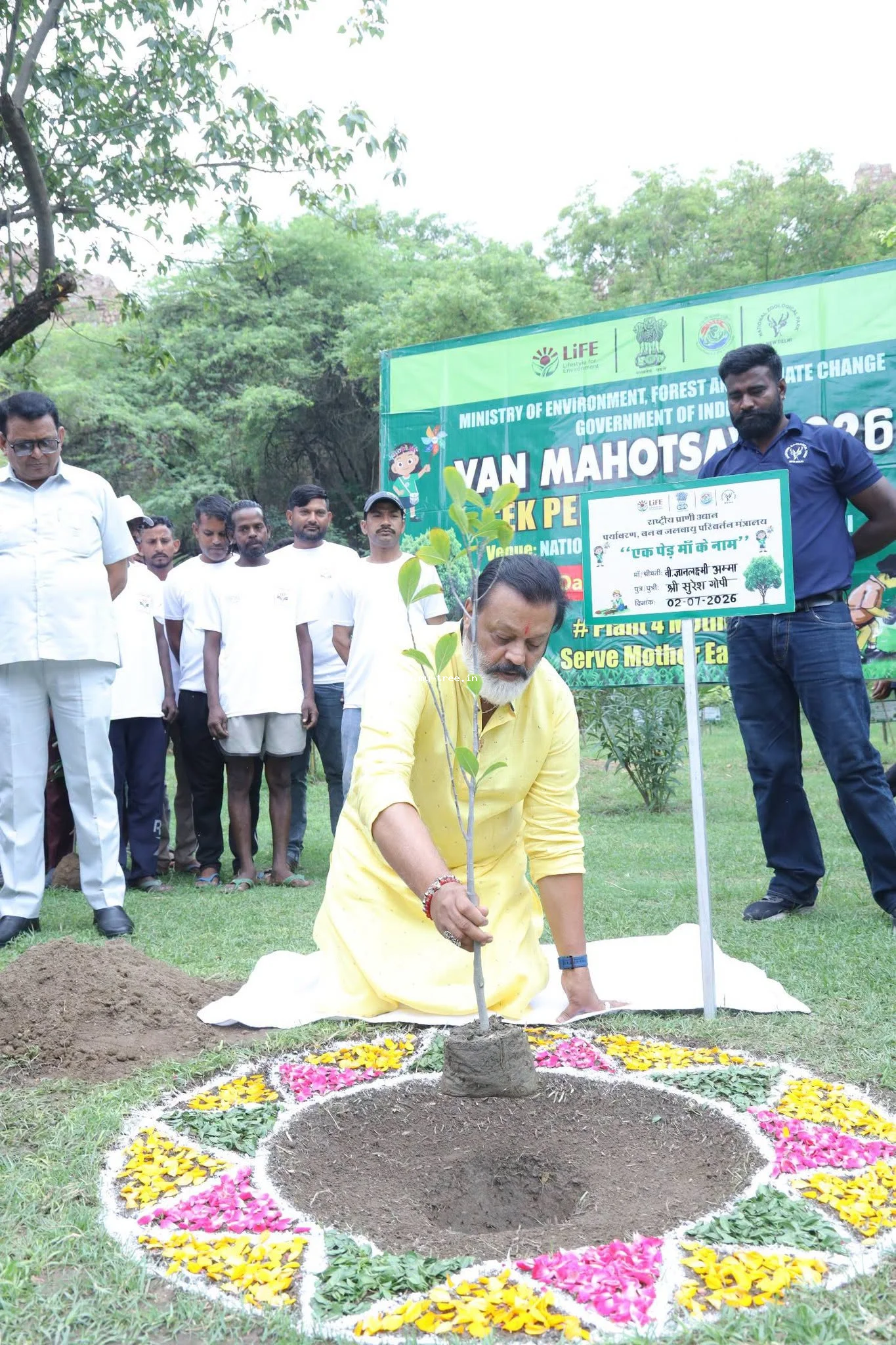
Planted by Shri Suresh Gopi, Union Minister of State
July 02, 2026 · National Zoological Park, New Delhi
🌿 Hi, I'm Banyan Tree
Ask me anything — in any language
🌳 Banyan Tree is speaking...
Quick Questions
Various parts of the Banyan Tree are used in traditional Ayurvedic medicine. The bark is valued for its astringent properties and is traditionally used for treating diarrhea and inflammation. The latex has been applied to wounds, cracked skin, and dental problems. Leaves are used in poultices for ulcers and skin conditions, while the roots have been traditionally used for strengthening gums. Its fruits are nutritious and consumed by wildlife, contributing to ecological health.
🔊 Listen
The Banyan Tree is famous for its aerial roots that develop into supporting trunks, enabling a single tree to cover thousands of square meters. It is considered sacred in many cultures and symbolizes longevity, wisdom, and resilience. It serves as a keystone species by supporting diverse wildlife, e
🔊 Listen
The Banyan Tree is famous for its aerial roots that develop into supporting trunks, enabling a single tree to cover thousands of square meters. It is considered sacred in many cultures and symbolizes longevity, wisdom, and resilience. It serves as a keystone species by supporting diverse wildlife, enhancing groundwater recharge, reducing urban heat, storing significant amounts of carbon, and improving air quality.
🔊 Listen
Various parts of the Banyan Tree are used in traditional Ayurvedic medicine. The bark is valued for its astringent properties and is traditionally used for treating diarrhea and inflammation. The latex has been applied to wounds, cracked skin, and dental problems. Leaves are used in poultices for ulcers and skin conditions, while the roots have been traditionally used for strengthening gums. Its fruits are nutritious and consumed by wildlife, contributing to ecological health.
🔊 Listen
300 years
🔊 Listen
25 meters
🔊 Listen
Native
🔊 Listen
⚠️ My-Tree is not responsible for misuse. Always consult a qualified professional before using any plant material.
🌱 Story of Banyan Tree
The Banyan Tree (Ficus benghalensis) is one of the largest and longest-living trees in the world. It is recognized by its massive canopy and aerial roots that grow into additional trunks, allowing the tree to spread over a large area. Revered as India's national tree, it provides shade, habitat, and food for numerous birds, mammals, insects, and epiphytic plants. It thrives in tropical and subtropical climates and plays a vital role in maintaining biodiversity and improving local microclimates.
📷 Gallery
This tree heals the planet
Every single day, Banyan Tree gives back
☁️ CO₂ Absorbed
22 kg/yr
≈ 110 km of car emissions offset annually
💨 Oxygen Released
16 kg/yr
💧 Water Conserved
3,740 L/yr
50
Age
—m
Height
—yr
Lifespan
Sapling
Stage
📋 Details
🌿
Family
Moraceae
📍
Native Status
Native
🏙️
City
National Zoological Park, New Delhi
🗺️
Location
Public Park
🩺 Medicinal Properties
Various parts of the Banyan Tree are used in traditional Ayurvedic medicine. The bark is valued for its astringent properties and is traditionally used for treating diarrhea and inflammation. The latex has been applied to wounds, cracked skin, and dental problems. Leaves are used in poultices for ulcers and skin conditions, while the roots have been traditionally used for strengthening gums. Its fruits are nutritious and consumed by wildlife, contributing to ecological health.
✨ What makes Banyan Tree special
The Banyan Tree is famous for its aerial roots that develop into supporting trunks, enabling a single tree to cover thousands of square meters. It is considered sacred in many cultures and symbolizes longevity, wisdom, and resilience. It serves as a keystone species by supporting diverse wildlife, e