The bark decoction is used to treat diarrhea, dysentery, and skin diseases. The leaves are applied externally to wounds and ulcers. The fruit is edible and has laxative properties.
🔊 Listen
It is a resilient tree that can tolerate drought and poor soil conditions. It is also known for its fast growth rate and is often used for afforestation and soil conservation.
🔊 Listen
It is a resilient tree that can tolerate drought and poor soil conditions. It is also known for its fast growth rate and is often used for afforestation and soil conservation.
🔊 Listen
The bark decoction is used to treat diarrhea, dysentery, and skin diseases. The leaves are applied externally to wounds and ulcers. The fruit is edible and has laxative properties.
🔊 Listen
100 years
🔊 Listen
15 meters
🔊 Listen
Native
🔊 Listen
⚠️ My-Tree is not responsible for misuse. Always consult a qualified professional before using any plant material.
🌱 Story of Indian Ash Tree
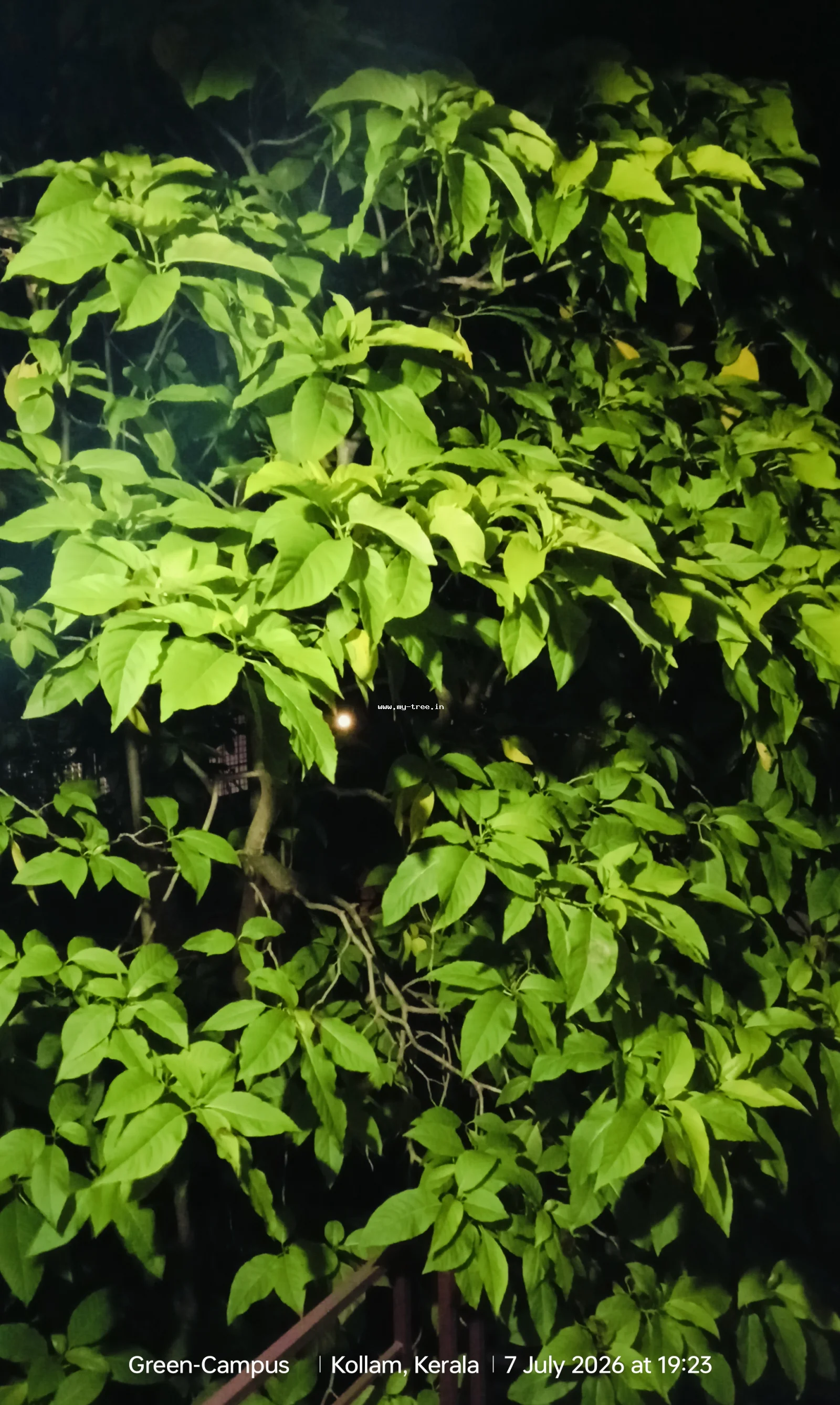
A fast-growing deciduous tree native to India and Southeast Asia. It has a spreading crown and compound leaves. The bark is greyish-white and smooth, becoming rough with age. It is often planted as an avenue tree and for its timber.
This tree heals the planet
Every single day, Indian Ash Tree gives back
☁️ CO₂ Absorbed
250 kg/yr
≈ 1,250 km of car emissions offset annually
💨 Oxygen Released
182 kg/yr
💧 Water Conserved
42,500 L/yr
—
Age
15.0m
Height
100yr
Lifespan
Mature
Stage
📋 Details
🌿
Family
Anacardiaceae
📍
Native Status
🏙️
City
Kollam
🗺️
Location
Private Property
🩺 Medicinal Properties
The bark decoction is used to treat diarrhea, dysentery, and skin diseases. The leaves are applied externally to wounds and ulcers. The fruit is edible and has laxative properties.
✨ What makes Indian Ash Tree special
It is a resilient tree that can tolerate drought and poor soil conditions. It is also known for its fast growth rate and is often used for afforestation and soil conservation.