In traditional medicine, parts of the plant have been used for their anti-inflammatory, antioxidant, and antimicrobial properties, though it should be handled with care as the milky latex can be an irritant.
🔊 Listen
Highly valued for its intensely fragrant, ornamental flowers which are frequently used in garlands and religious offerings in India.
🔊 Listen
Highly valued for its intensely fragrant, ornamental flowers which are frequently used in garlands and religious offerings in India.
🔊 Listen
In traditional medicine, parts of the plant have been used for their anti-inflammatory, antioxidant, and antimicrobial properties, though it should be handled with care as the milky latex can be an irritant.
🔊 Listen
50 years
🔊 Listen
5 meters
🔊 Listen
Non-Native
🔊 Listen
⚠️ My-Tree is not responsible for misuse. Always consult a qualified professional before using any plant material.
🌱 Story of Frangipani
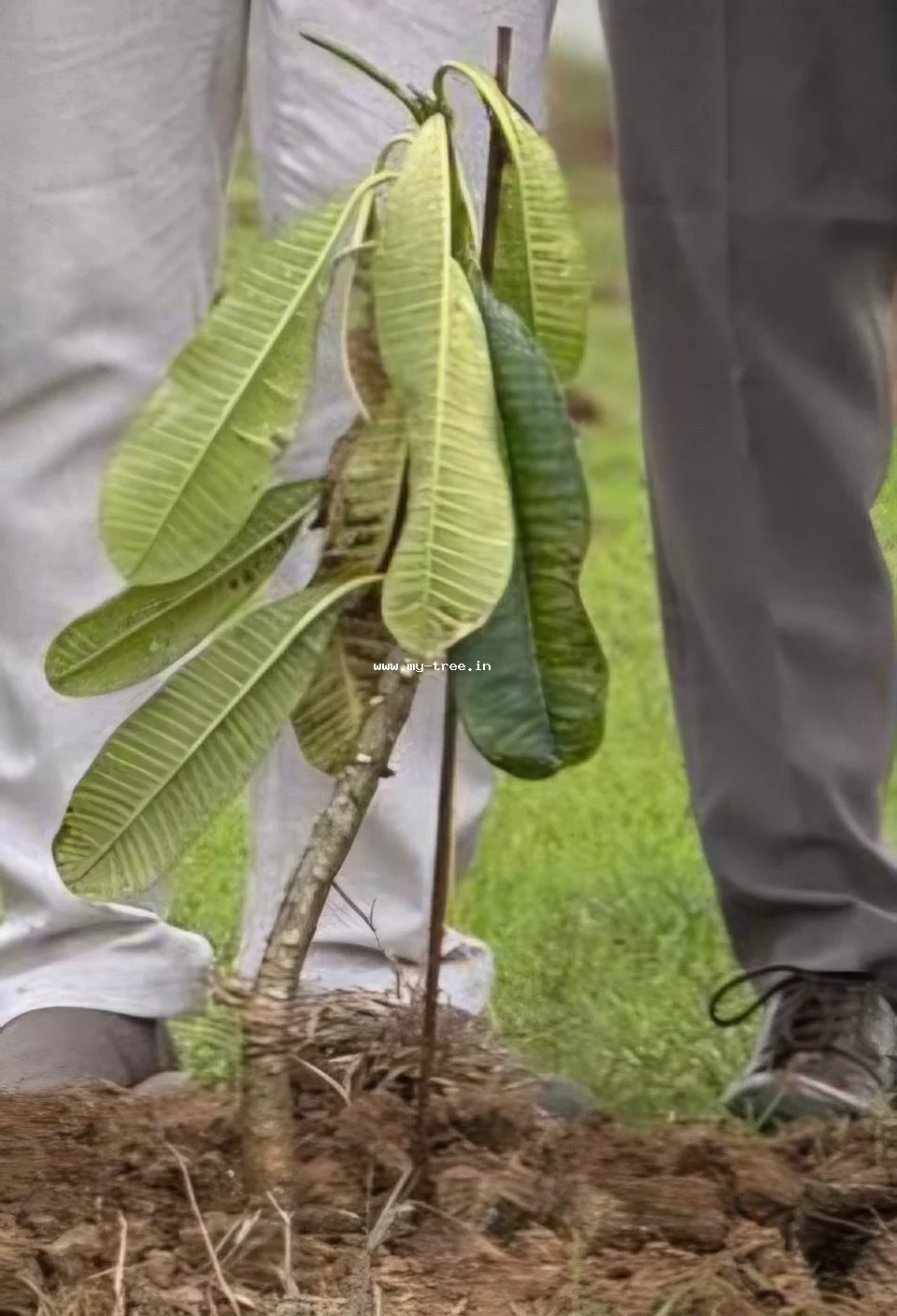
This is a young Plumeria rubra, commonly known as Frangipani. It is a deciduous shrub or small tree widely planted in India for its fragrant, colorful flowers. It is native to Mexico and Central America but has become naturalized in tropical regions worldwide. The specimen in the photo is a newly planted sapling, characterized by its succulent-like stems and characteristic leaf arrangement.
This tree heals the planet
Every single day, Frangipani gives back
☁️ CO₂ Absorbed
20 kg/yr
≈ 100 km of car emissions offset annually
💨 Oxygen Released
15 kg/yr
💧 Water Conserved
3,400 L/yr
—
Age
5.0m
Height
50yr
Lifespan
Sapling
Stage
📋 Details
🌿
Family
Apocynaceae
📍
Native Status
Non-Native
🏙️
City
Dharwad
🗺️
Location
Private Property
🩺 Medicinal Properties
In traditional medicine, parts of the plant have been used for their anti-inflammatory, antioxidant, and antimicrobial properties, though it should be handled with care as the milky latex can be an irritant.
✨ What makes Frangipani special
Highly valued for its intensely fragrant, ornamental flowers which are frequently used in garlands and religious offerings in India.