The bark is traditionally used in some regions for its astringent properties, and decoctions have been used in folk medicine to treat various ailments, though it is primarily valued for its timber and ecological role.
🔊 Listen
It is a highly valued timber tree known for producing one of the hardest and heaviest woods in India. It is also an excellent species for afforestation in degraded, dry, and rocky lands due to its extreme resilience.
🔊 Listen
It is a highly valued timber tree known for producing one of the hardest and heaviest woods in India. It is also an excellent species for afforestation in degraded, dry, and rocky lands due to its extreme resilience.
🔊 Listen
The bark is traditionally used in some regions for its astringent properties, and decoctions have been used in folk medicine to treat various ailments, though it is primarily valued for its timber and ecological role.
🔊 Listen
100 years
🔊 Listen
25 meters
🔊 Listen
Native
🔊 Listen
⚠️ My-Tree is not responsible for misuse. Always consult a qualified professional before using any plant material.
🌱 Story of Hardwickia binata
Thimmamma Marrimanu holds immense ecological, cultural, and economic importance, functioning as a self-sustaining ecosystem that supports hundreds of bird, insect, and small mammal species within its massive five-acre canopy. Culturally, it serves as a deeply revered sacred grove and pilgrimage site where the central temple anchors local folklore, community identity, and spiritual traditions passed down through generations. Furthermore, its global status as the world’s largest single tree canopy drives vital eco-tourism to the rural Sri Sathya Sai district, generating sustainable livelihoods for local communities and fostering regional environmental conservation efforts.
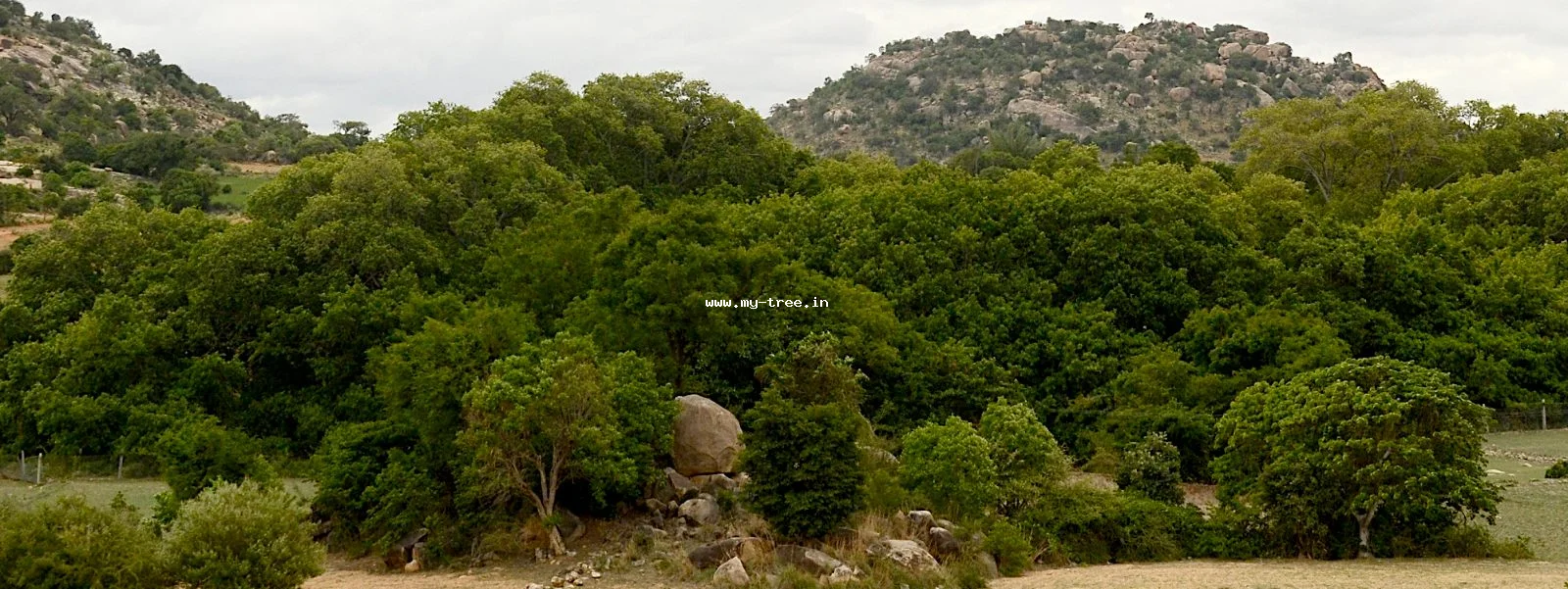
Hardwickia binata, commonly known as Anjan, is a large, deciduous tree native to the dry tropical forests of India. It is characterized by its drooping branches and distinctive bifoliate leaves. The tree is highly drought-tolerant and thrives in rocky, arid landscapes, making it a vital component of the Deccan Plateau ecosystem. Due to the distance and density of the canopy in the provided image, this identification is based on the typical habitat and growth habit of the species in such rocky terrain.
This tree heals the planet
Every single day, Hardwickia binata gives back
☁️ CO₂ Absorbed
22 kg/yr
≈ 110 km of car emissions offset annually
💨 Oxygen Released
16 kg/yr
💧 Water Conserved
3,740 L/yr
—
Age
25.0m
Height
100yr
Lifespan
Mature
Stage
📋 Details
🌿
Family
Fabaceae
📍
Native Status
Native
🏙️
City
Kadiri, Andhra Pradesh
🗺️
Location
Roadside
🩺 Medicinal Properties
The bark is traditionally used in some regions for its astringent properties, and decoctions have been used in folk medicine to treat various ailments, though it is primarily valued for its timber and ecological role.
✨ What makes Hardwickia binata special
It is a highly valued timber tree known for producing one of the hardest and heaviest woods in India. It is also an excellent species for afforestation in degraded, dry, and rocky lands due to its extreme resilience.