September 28, 2026 · MSU Abishekapatti, Tirunelveli
Digital IdentityTree Visiting Card
🌿
TREE No. 180
My-Tree · Green-Campus
Bael
Aegle marmelos
FamilyRutaceae
StatusNative
LocationMSU Abishekapatti, Tirunelveli
TaggedSeptember 28, 2026
Scan to meet this treemy-tree.in/tree/180
🌿 Hi, I'm Bael
Ask me anything — in any language
🌳 Bael is speaking...
Quick Questions
The fruit, leaves, and roots are widely used in Ayurveda. The fruit is known for its digestive properties, particularly in treating diarrhea, dysentery, and constipation. It has anti-inflammatory, antimicrobial, and antioxidant properties. Leaf extracts are often used to manage blood sugar levels and treat respiratory issues.
🔊 Listen
The Bael tree is considered sacred and is dedicated to Lord Shiva. Its leaves are traditionally offered during worship. Beyond its religious significance, it is a highly resilient tree capable of growing in diverse soil types and harsh climatic conditions, making it an excellent choice for agrofores
🔊 Listen
The Bael tree is considered sacred and is dedicated to Lord Shiva. Its leaves are traditionally offered during worship. Beyond its religious significance, it is a highly resilient tree capable of growing in diverse soil types and harsh climatic conditions, making it an excellent choice for agroforestry and reforestation in India.
🔊 Listen
The fruit, leaves, and roots are widely used in Ayurveda. The fruit is known for its digestive properties, particularly in treating diarrhea, dysentery, and constipation. It has anti-inflammatory, antimicrobial, and antioxidant properties. Leaf extracts are often used to manage blood sugar levels and treat respiratory issues.
🔊 Listen
100 years
🔊 Listen
8 meters
🔊 Listen
Native
🔊 Listen
⚠️ My-Tree is not responsible for misuse. Always consult a qualified professional before using any plant material.
🌱 Story of Bael
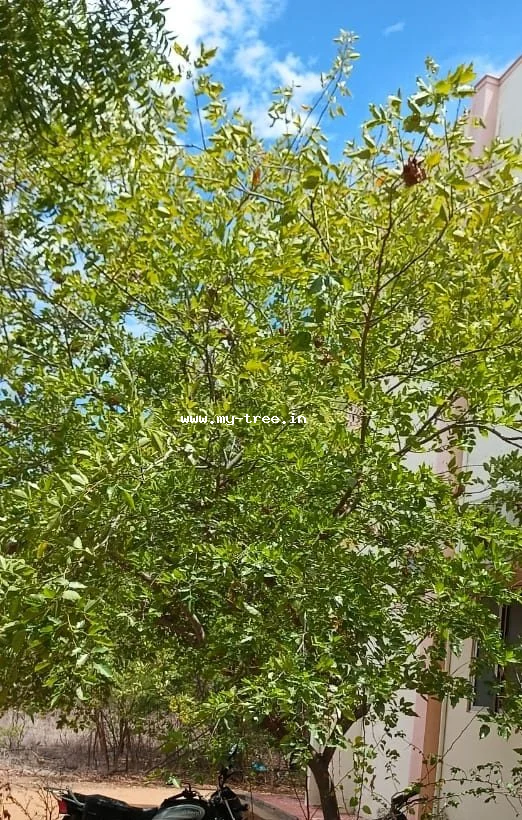
Aegle marmelos, commonly known as Bael, is a sacred tree native to India. It is a medium-sized, deciduous tree with trifoliate leaves and thorny branches. The tree is highly valued for its fruit, which has a hard, woody shell and aromatic pulp. It is often found near temples and is considered auspicious in Hindu culture. The identification is based on the characteristic trifoliate leaf structure and branching pattern visible in the image.
This tree heals the planet
Every single day, Bael gives back
☁️ CO₂ Absorbed
22 kg/yr
≈ 110 km of car emissions offset annually
💨 Oxygen Released
16 kg/yr
💧 Water Conserved
3,740 L/yr
—
Age
8.0m
Height
100yr
Lifespan
Mature
Stage
📋 Details
🌿
Family
Rutaceae
📍
Native Status
Native
🏙️
City
MSU Abishekapatti, Tirunelveli
🗺️
Location
Campus
🩺 Medicinal Properties
The fruit, leaves, and roots are widely used in Ayurveda. The fruit is known for its digestive properties, particularly in treating diarrhea, dysentery, and constipation. It has anti-inflammatory, antimicrobial, and antioxidant properties. Leaf extracts are often used to manage blood sugar levels and treat respiratory issues.
✨ What makes Bael special
The Bael tree is considered sacred and is dedicated to Lord Shiva. Its leaves are traditionally offered during worship. Beyond its religious significance, it is a highly resilient tree capable of growing in diverse soil types and harsh climatic conditions, making it an excellent choice for agrofores