Historically, oak bark has been used in traditional medicine for its astringent and antiseptic properties, often prepared as a decoction to treat inflammation, diarrhea, and skin conditions due to its high tannin content.
🔊 Listen
Renowned for its immense longevity and status as a keystone species, it supports a vast array of biodiversity, including hundreds of insect, fungi, and bird species.
🔊 Listen
Renowned for its immense longevity and status as a keystone species, it supports a vast array of biodiversity, including hundreds of insect, fungi, and bird species.
🔊 Listen
Historically, oak bark has been used in traditional medicine for its astringent and antiseptic properties, often prepared as a decoction to treat inflammation, diarrhea, and skin conditions due to its high tannin content.
🔊 Listen
500 years
🔊 Listen
25 meters
🔊 Listen
Non-Native
🔊 Listen
⚠️ My-Tree is not responsible for misuse. Always consult a qualified professional before using any plant material.
🌱 Story of English Oak
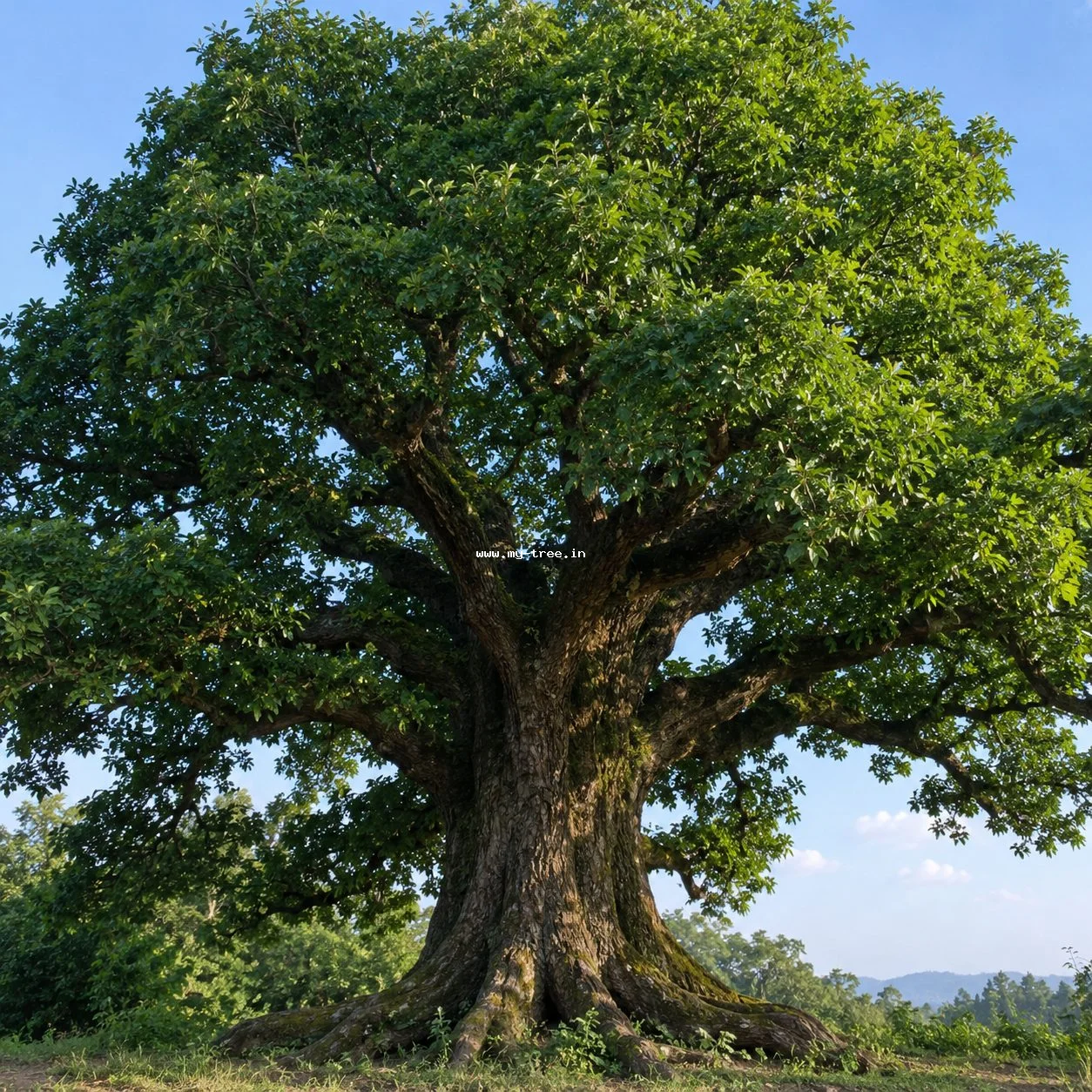
The English Oak is a large, long-lived deciduous tree characterized by its broad, spreading crown and deeply fissured, rugged bark. While not native to India, it is occasionally found in botanical gardens or temperate regions of the Himalayas. This specimen shows classic old-growth features, including a massive, thick trunk and a wide, complex canopy structure.
This tree heals the planet
Every single day, English Oak gives back
☁️ CO₂ Absorbed
22 kg/yr
≈ 110 km of car emissions offset annually
💨 Oxygen Released
16 kg/yr
💧 Water Conserved
3,740 L/yr
—
Age
25.0m
Height
500yr
Lifespan
Old Growth
Stage
📋 Details
🌿
Family
Fagaceae
📍
Native Status
Non-Native
🏙️
City
Tvm
🗺️
Location
Roadside
🩺 Medicinal Properties
Historically, oak bark has been used in traditional medicine for its astringent and antiseptic properties, often prepared as a decoction to treat inflammation, diarrhea, and skin conditions due to its high tannin content.
✨ What makes English Oak special
Renowned for its immense longevity and status as a keystone species, it supports a vast array of biodiversity, including hundreds of insect, fungi, and bird species.