The fruit, leaves, and bark are widely used in Ayurveda. It is highly effective in treating gastrointestinal disorders like diarrhea, dysentery, and constipation. It also possesses anti-inflammatory, antimicrobial, and antioxidant properties.
🔊 Listen
It is considered a sacred tree in Hinduism, often associated with Lord Shiva, and its leaves are used in religious offerings. It is also highly valued for its resilience and ability to grow in diverse soil types.
🔊 Listen
It is considered a sacred tree in Hinduism, often associated with Lord Shiva, and its leaves are used in religious offerings. It is also highly valued for its resilience and ability to grow in diverse soil types.
🔊 Listen
The fruit, leaves, and bark are widely used in Ayurveda. It is highly effective in treating gastrointestinal disorders like diarrhea, dysentery, and constipation. It also possesses anti-inflammatory, antimicrobial, and antioxidant properties.
🔊 Listen
100 years
🔊 Listen
4 meters
🔊 Listen
Native
🔊 Listen
⚠️ My-Tree is not responsible for misuse. Always consult a qualified professional before using any plant material.
🌱 Story of Bael
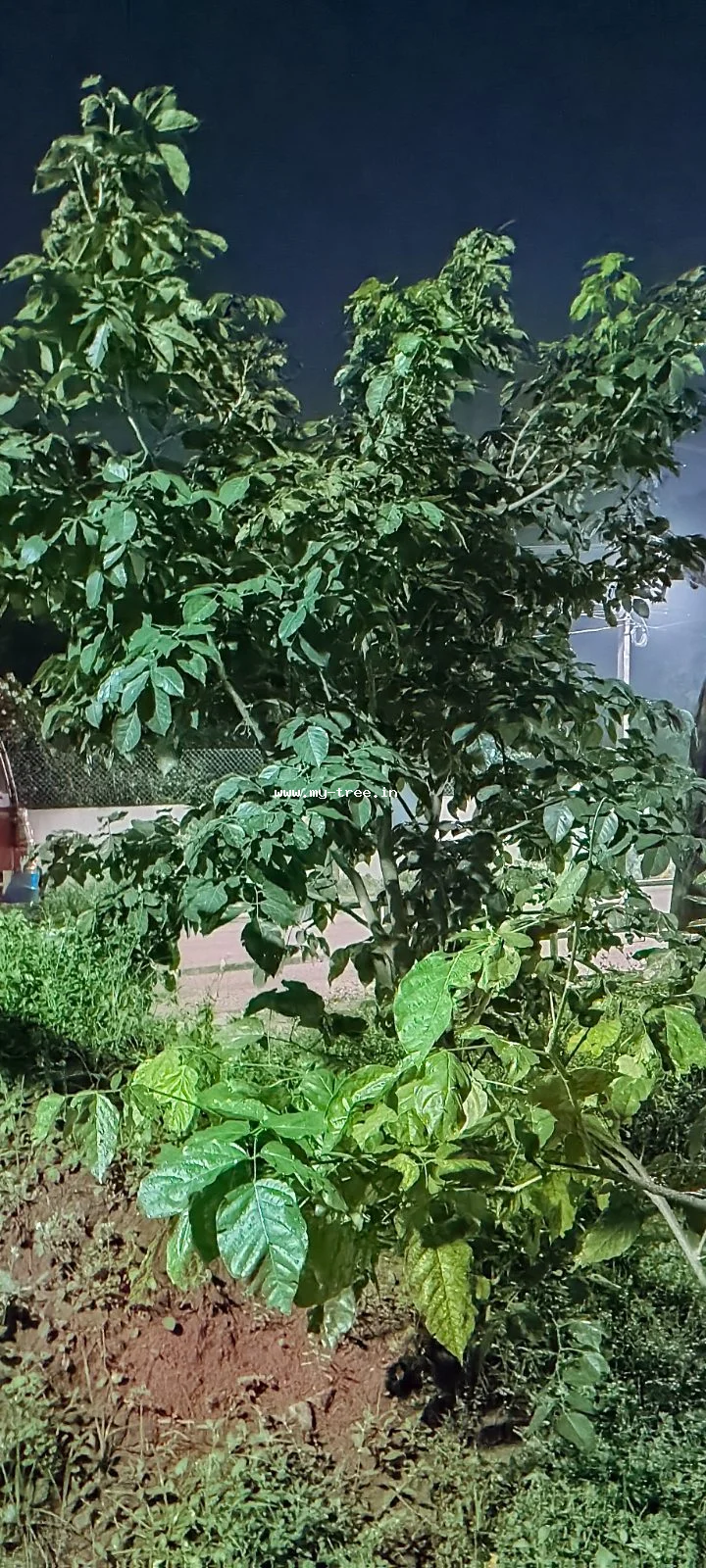
The Bael tree, also known as the wood apple or stone apple, is a sacred tree in India. It is characterized by its trifoliate leaves and hard-shelled, aromatic fruit. This specimen appears to be a young tree, likely in its early growth phase. The identification is based on the distinct trifoliate leaf structure and branching pattern typical of Aegle marmelos.
This tree heals the planet
Every single day, Bael gives back
☁️ CO₂ Absorbed
22 kg/yr
≈ 110 km of car emissions offset annually
💨 Oxygen Released
16 kg/yr
💧 Water Conserved
3,740 L/yr
—
Age
4.0m
Height
100yr
Lifespan
Young
Stage
📋 Details
🌿
Family
Rutaceae
📍
Native Status
Native
🏙️
City
Ashramam, Kollam
🗺️
Location
Campus
🩺 Medicinal Properties
The fruit, leaves, and bark are widely used in Ayurveda. It is highly effective in treating gastrointestinal disorders like diarrhea, dysentery, and constipation. It also possesses anti-inflammatory, antimicrobial, and antioxidant properties.
✨ What makes Bael special
It is considered a sacred tree in Hinduism, often associated with Lord Shiva, and its leaves are used in religious offerings. It is also highly valued for its resilience and ability to grow in diverse soil types.