Various parts of the mango tree are used in traditional medicine. The bark, leaves, and flowers are often used for their astringent, anti-inflammatory, and antioxidant properties. Mango leaves are commonly used in traditional rituals and for managing blood sugar levels in some cultures.
🔊 Listen
Known as the 'King of Fruits' in India, the mango tree is culturally significant and holds a prominent place in Indian agriculture, mythology, and culinary traditions.
🔊 Listen
Known as the 'King of Fruits' in India, the mango tree is culturally significant and holds a prominent place in Indian agriculture, mythology, and culinary traditions.
🔊 Listen
Various parts of the mango tree are used in traditional medicine. The bark, leaves, and flowers are often used for their astringent, anti-inflammatory, and antioxidant properties. Mango leaves are commonly used in traditional rituals and for managing blood sugar levels in some cultures.
🔊 Listen
100 years
🔊 Listen
1 meters
🔊 Listen
Native
🔊 Listen
⚠️ My-Tree is not responsible for misuse. Always consult a qualified professional before using any plant material.
🌱 Story of Sapodila
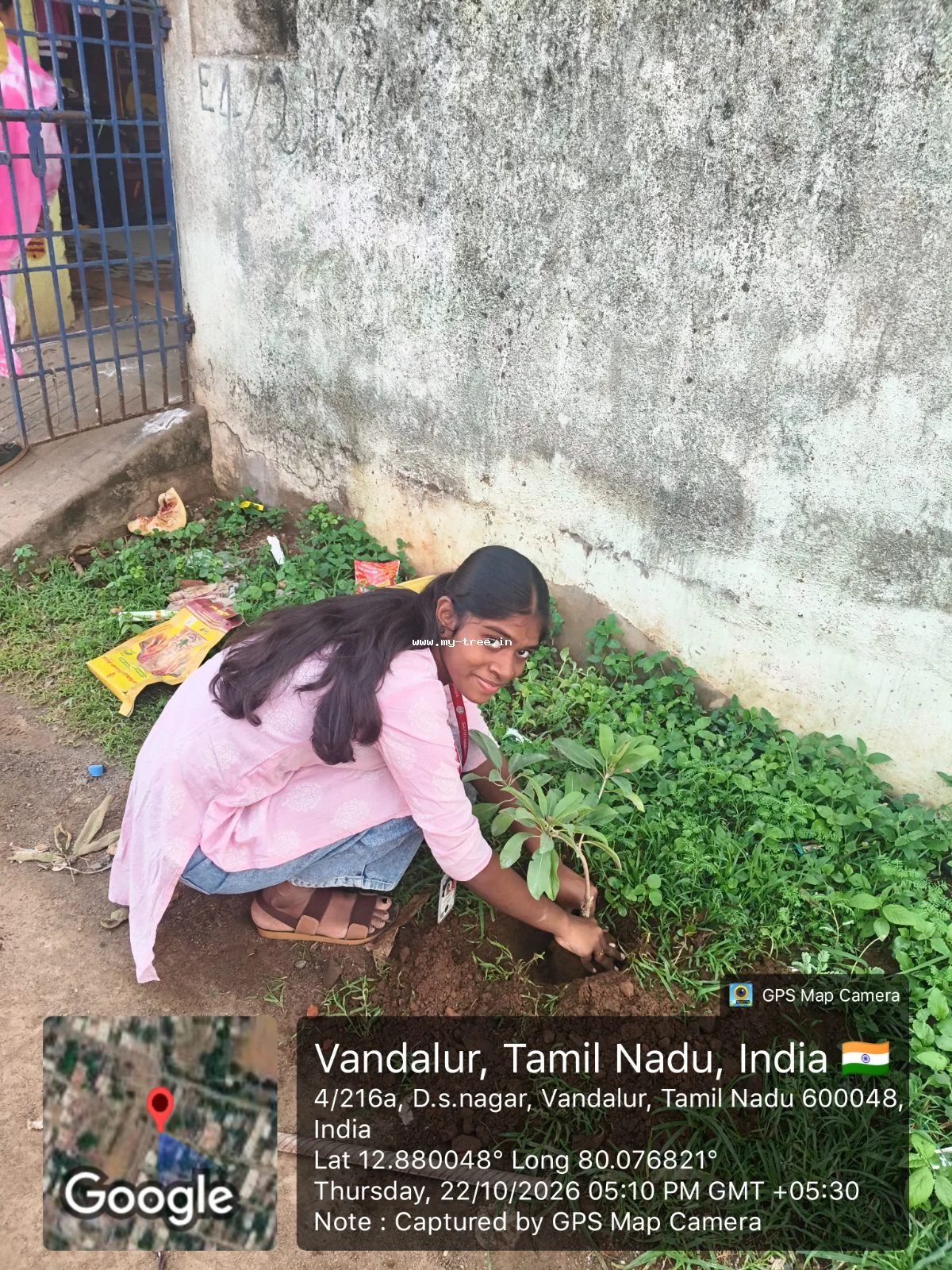
The plant being planted is a young mango sapling, identified by its characteristic lanceolate, alternate leaves. Mango is a tropical fruit tree native to South Asia, widely cultivated for its delicious fruit and dense shade. It is a long-lived evergreen tree that can grow quite large when mature.
This tree heals the planet
Every single day, Sapodila gives back
☁️ CO₂ Absorbed
20 kg/yr
≈ 100 km of car emissions offset annually
💨 Oxygen Released
15 kg/yr
💧 Water Conserved
3,400 L/yr
—
Age
1.0m
Height
100yr
Lifespan
Sapling
Stage
📋 Details
🌿
Family
Anacardiaceae
📍
Native Status
Native
🏙️
City
Vandalur, Chennai
🗺️
Location
Roadside
🩺 Medicinal Properties
Various parts of the mango tree are used in traditional medicine. The bark, leaves, and flowers are often used for their astringent, anti-inflammatory, and antioxidant properties. Mango leaves are commonly used in traditional rituals and for managing blood sugar levels in some cultures.
✨ What makes Sapodila special
Known as the 'King of Fruits' in India, the mango tree is culturally significant and holds a prominent place in Indian agriculture, mythology, and culinary traditions.