Historically, various parts of the Plumeria have been used in traditional medicine across Asia and the Americas. The milky sap is often used as a topical treatment for skin inflammations, warts, and itching, though it can be an irritant to some. The bark is sometimes prepared as a decoction to treat fever and digestive issues due to its purgative properties. Additionally, the flowers are known to have anti-inflammatory and antioxidant effects, and in some cultures, they are used to make infusions to treat coughs or high blood pressure.
Note: The sap is mildly toxic if ingested and can cause skin irritation. Always consult a professional before using any part of the tree medicinally.
🔊 Listen
—
🔊 Listen
Plumeria spp.
🔊 Listen
⚠️ My-Tree is not responsible for misuse. Always consult a qualified professional before using any plant material.
🌱 Story of Frangipani, Temple Tree,
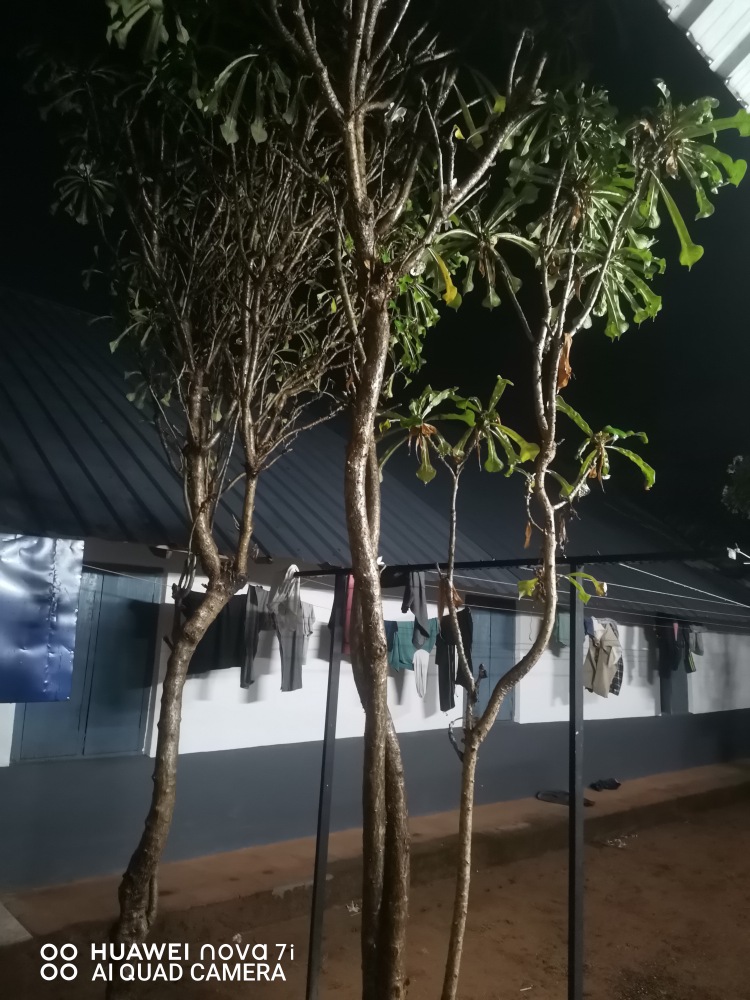
The Plumeria is a deciduous (or semi-evergreen) tropical tree famous for its incredibly fragrant flowers and its "architectural" look. It features thick, fleshy branches that exude a milky white sap (latex) when injured. The leaves are typically long, leathery, and arranged in a spiral cluster at the ends of the branches. Because they are hardy and can grow in poor soil with little water, they are staples in tropical landscaping and graveyard or temple gardens
This tree heals the planet
Every single day, Frangipani, Temple Tree, gives back
☁️ CO₂ Absorbed
10 kg/yr
≈ 50 km of car emissions offset annually
💨 Oxygen Released
7 kg/yr
💧 Water Conserved
1,700 L/yr
—
Age
8.0m
Height
80yr
Lifespan
—
Stage
📋 Details
🌿
Family
—
📍
Native Status
—
🏙️
City
kollam
🗺️
Location
Campus
🩺 Medicinal Properties
Historically, various parts of the Plumeria have been used in traditional medicine across Asia and the Americas. The milky sap is often used as a topical treatment for skin inflammations, warts, and itching, though it can be an irritant to some. The bark is sometimes prepared as a decoction to treat fever and digestive issues due to its purgative properties. Additionally, the flowers are known to have anti-inflammatory and antioxidant effects, and in some cultures, they are used to make infusions to treat coughs or high blood pressure.
Note: The sap is mildly toxic if ingested and can cause skin irritation. Always consult a professional before using any part of the tree medicinally.