Various parts of the mango tree are used in traditional medicine. Leaves are brewed into tea for treating diabetes, hypertension, and respiratory issues due to antioxidant and anti-inflammatory compounds. Bark extracts show antimicrobial and antidiarrheal properties. Fruit is rich in vitamins A and C, supporting immune health and vision. Seeds and kernel oil are used for skin conditions and as an astringent. Unripe fruit aids digestion. Modern studies highlight potential anti-cancer, anti-diabetic, and hepatoprotective effects from polyphenols and mangiferin.
🔊 Listen
The mango tree is renowned as the 'king of fruits' producer, with hundreds of cultivars offering diverse flavors, colors, and sizes. It has significant economic importance in tropical agriculture, supporting livelihoods through fruit production, exports, and by-products like pickles and juices. The
🔊 Listen
Mangifera indica
🔊 Listen
⚠️ My-Tree is not responsible for misuse. Always consult a qualified professional before using any plant material.
🌱 Story of Mango Tree
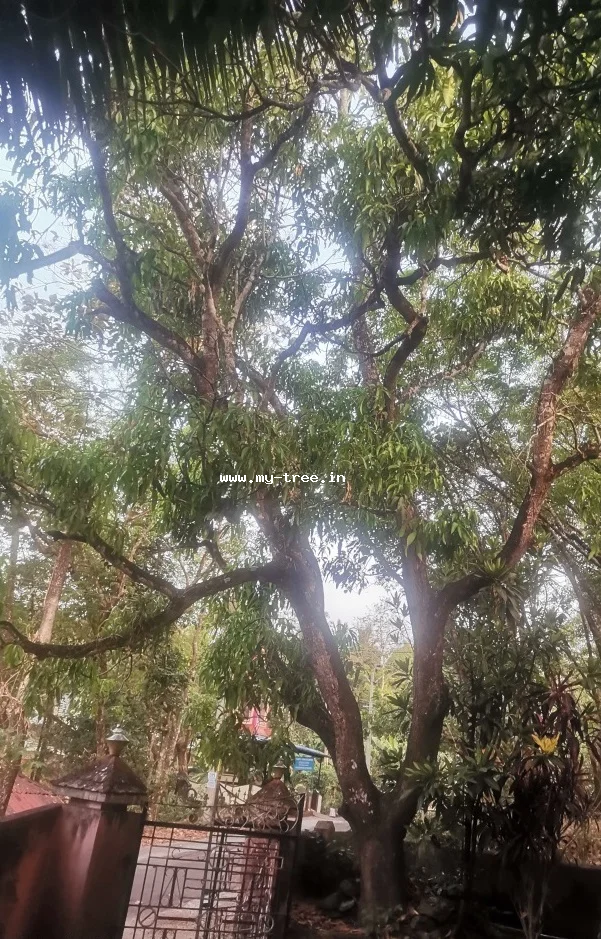
Mangifera indica, commonly known as the mango tree, is a large evergreen fruit tree with a spreading canopy. It features glossy dark green leaves, fragrant flowers, and produces edible mango fruits. In cultivation, trees are often pruned to 10-15 meters for easier harvesting, though wild or unmanaged trees can reach 30 meters or more. It thrives in tropical and subtropical climates, preferring well-drained soils and full sun. The tree provides shade, fruit, and supports biodiversity while contributing to carbon sequestration through its substantial biomass.
This tree heals the planet
Every single day, Mango Tree gives back
☁️ CO₂ Absorbed
22 kg/yr
≈ 110 km of car emissions offset annually
💨 Oxygen Released
16 kg/yr
💧 Water Conserved
3,740 L/yr
15
Age
—m
Height
—yr
Lifespan
Mature
Stage
📋 Details
🌿
Family
Anacardiaceae
📍
Native Status
—
🏙️
City
Kollam
🗺️
Location
Private Property
🩺 Medicinal Properties
Various parts of the mango tree are used in traditional medicine. Leaves are brewed into tea for treating diabetes, hypertension, and respiratory issues due to antioxidant and anti-inflammatory compounds. Bark extracts show antimicrobial and antidiarrheal properties. Fruit is rich in vitamins A and C, supporting immune health and vision. Seeds and kernel oil are used for skin conditions and as an astringent. Unripe fruit aids digestion. Modern studies highlight potential anti-cancer, anti-diabetic, and hepatoprotective effects from polyphenols and mangiferin.
✨ What makes Mango Tree special
The mango tree is renowned as the 'king of fruits' producer, with hundreds of cultivars offering diverse flavors, colors, and sizes. It has significant economic importance in tropical agriculture, supporting livelihoods through fruit production, exports, and by-products like pickles and juices. The