Mulberry fruits are rich in vitamin C, iron, and antioxidants such as resveratrol and anthocyanins, which support immunity and heart health. The leaves are traditionally used to help regulate blood sugar levels and support liver function. Bark and roots have been used in herbal medicine for anti-inflammatory and expectorant properties.
🔊 Listen
Mulberry trees are essential for silk production as their leaves are the exclusive food for silkworms. The fruits are edible and nutritious, used in jams, juices, and desserts. The tree also improves soil stability, provides shade, and supports biodiversity by attracting birds and pollinators.
🔊 Listen
Morus alba
🔊 Listen
⚠️ My-Tree is not responsible for misuse. Always consult a qualified professional before using any plant material.
🌱 Story of Mulberry
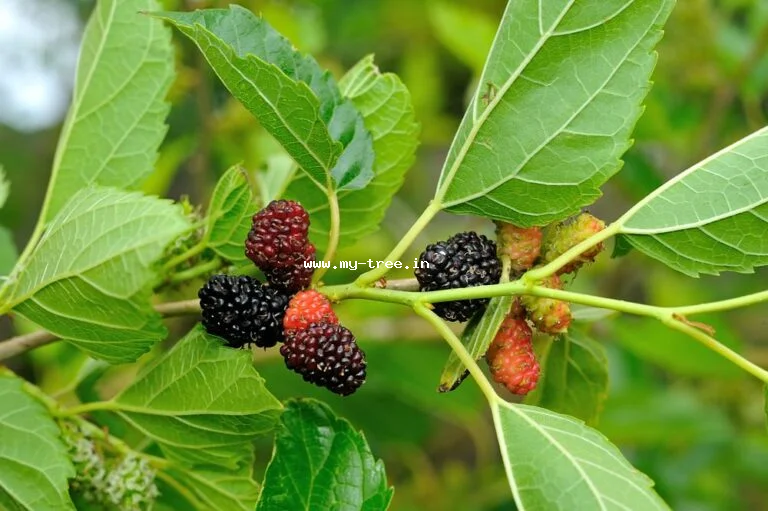
Mulberry is a fast-growing deciduous tree known for its sweet, berry-like fruits that range from white and red to deep purple. It has broad, heart-shaped leaves and a dense canopy that provides excellent shade. Mulberry trees are widely cultivated for their fruits and as the primary food source for silkworms in sericulture. They adapt well to various soil types and climatic conditions.
This tree heals the planet
Every single day, Mulberry gives back
☁️ CO₂ Absorbed
22 kg/yr
≈ 110 km of car emissions offset annually
💨 Oxygen Released
16 kg/yr
💧 Water Conserved
3,740 L/yr
10
Age
—m
Height
—yr
Lifespan
Young
Stage
📋 Details
🌿
Family
Moraceae
📍
Native Status
—
🏙️
City
Kollam
🗺️
Location
Private Property
🩺 Medicinal Properties
Mulberry fruits are rich in vitamin C, iron, and antioxidants such as resveratrol and anthocyanins, which support immunity and heart health. The leaves are traditionally used to help regulate blood sugar levels and support liver function. Bark and roots have been used in herbal medicine for anti-inflammatory and expectorant properties.
✨ What makes Mulberry special
Mulberry trees are essential for silk production as their leaves are the exclusive food for silkworms. The fruits are edible and nutritious, used in jams, juices, and desserts. The tree also improves soil stability, provides shade, and supports biodiversity by attracting birds and pollinators.