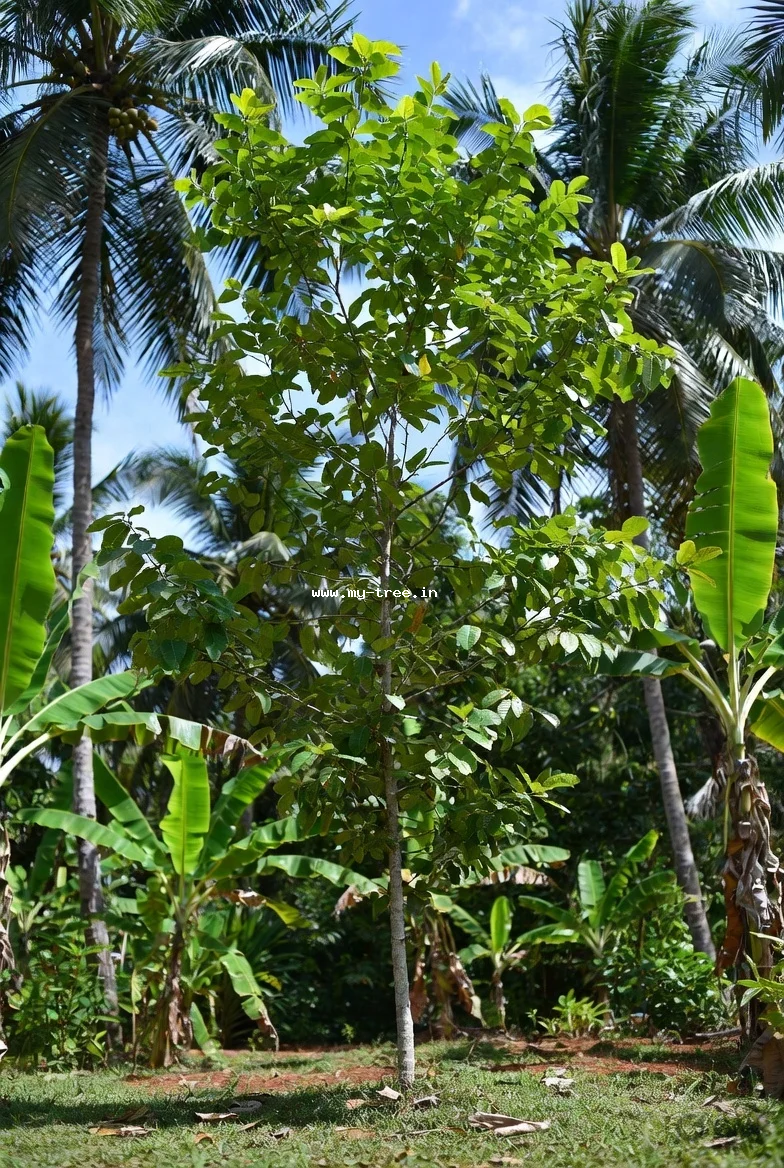
Jamun fruits, seeds, and bark have antidiabetic properties; seeds help regulate blood sugar. Rich in vitamin C and iron, aids digestion, oral health, and skin conditions. Bark treats diarrhea and asthma; leaves used for wounds.
🔊 Listen
Bears 100-200 kg fruits annually after 4-5 years. Wood is termite-resistant for furniture. Shade tree enhancing biodiversity. Culturally significant in India for monsoon fruits.
🔊 Listen
Syzygium cumini
🔊 Listen
⚠️ My-Tree is not responsible for misuse. Always consult a qualified professional before using any plant material.
🌱 Story of Jamun tree
The Jamun tree is an evergreen tree native to the Indian subcontinent, growing up to 30 meters tall with a wide canopy spread of 9-12 meters. It produces tangy-sweet purple-black fruits in summer, attracting birds, bees, and butterflies. The tree thrives in various soils, requires moderate water, and is low-maintenance once established.
This tree heals the planet
Every single day, Jamun tree gives back
☁️ CO₂ Absorbed
22 kg/yr
≈ 110 km of car emissions offset annually
💨 Oxygen Released
16 kg/yr
💧 Water Conserved
3,740 L/yr
10
Age
30.0m
Height
100yr
Lifespan
Stage
📋 Details
🌿
Family
Myrtaceae
📍
Native Status
🏙️
City
Kollam
🗺️
Location
Private Property
🩺 Medicinal Properties
Jamun fruits, seeds, and bark have antidiabetic properties; seeds help regulate blood sugar. Rich in vitamin C and iron, aids digestion, oral health, and skin conditions. Bark treats diarrhea and asthma; leaves used for wounds.
✨ What makes Jamun tree special
Bears 100-200 kg fruits annually after 4-5 years. Wood is termite-resistant for furniture. Shade tree enhancing biodiversity. Culturally significant in India for monsoon fruits.